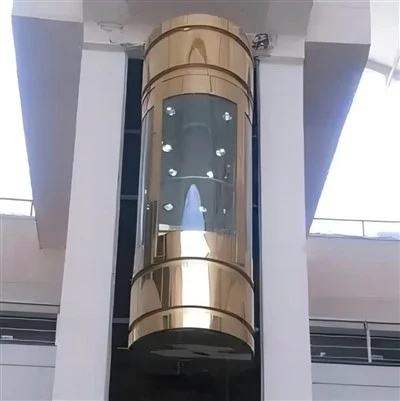
Hey there! As a panoramic elevator supplier, I've been thinking a lot about whether these cool elevators can be used in museums. Let's dig into this topic and see if panoramic elevators are a good fit for museum settings.
First off, what exactly is a panoramic elevator? Well, it's an elevator that offers a wide - angle view of the surrounding area. You've got different types, like the Square Panoramic Elevator, which has a square - shaped cabin that gives a stable and spacious viewing area. Then there's the Observation Elevator, designed specifically to let passengers take in amazing views as they move up and down. And for more compact spaces, we have the Small Capsule Lift.
Now, let's talk about the pros of using panoramic elevators in museums.
Advantages of Panoramic Elevators in Museums
Aesthetic Appeal
Museums are all about art, history, and creating a unique experience for visitors. Panoramic elevators can add a modern and stylish touch to the museum's architecture. They stand out as a piece of engineering art themselves. For example, a glass - enclosed panoramic elevator can reflect the sunlight in interesting ways during the day, and at night, when illuminated, it can become a focal point of the museum's exterior.
Enhanced Visitor Experience
Imagine you're a museum visitor, eager to explore different exhibits on multiple floors. Instead of taking a plain, boring elevator, you step into a panoramic one. As you ascend or descend, you can enjoy the view of the museum's interior, perhaps catching a glimpse of a large - scale sculpture or an interesting architectural feature. This makes the journey between floors an event in itself, rather than just a means of getting from point A to point B. It can also help visitors orient themselves within the museum, as they can see the layout from a different perspective.
Educational Value
In some museums, especially those with large - scale historical or scientific exhibits, a panoramic elevator can serve an educational purpose. For instance, in a natural history museum, as the elevator moves up, it could pass by dioramas or displays that tell the story of the evolution of a particular ecosystem. This provides an additional and unique way for visitors to learn about the museum's content.
Accessibility and Inclusivity
Panoramic elevators are also great for making the museum more accessible. They allow people with disabilities, the elderly, or families with strollers to move easily between floors. And the open - view design can make the elevator less intimidating for those who may be uncomfortable in enclosed spaces.
Challenges and Considerations
Of course, it's not all sunshine and rainbows. There are some challenges to using panoramic elevators in museums.
Cost
Installing a panoramic elevator is more expensive than a regular elevator. You've got to pay for the specialized glass and structural components that make the panoramic view possible. There are also higher maintenance costs, as the glass needs to be kept clean and in good condition to maintain the view. Museums, which often operate on tight budgets, may find it difficult to justify the expense.
Privacy and Security
Museums house a lot of valuable and sometimes sensitive exhibits. A panoramic elevator means that the interior of the elevator is visible from the outside, and vice versa. This could potentially pose a security risk, as it might be easier for someone to observe the movement of guards or the location of valuable items. There are also privacy concerns, especially if the elevator passes by areas where visitors are viewing more intimate or sensitive exhibits.
Climate Control
The large glass surfaces of panoramic elevators can make it more difficult to control the climate inside the elevator and in the surrounding areas. In hot weather, the glass can let in a lot of heat, which may require additional air - conditioning. In cold weather, it can lead to heat loss. This can be a challenge for museums, which need to maintain a stable environment for their exhibits.
Noise and Distraction
The movement of a panoramic elevator, especially if it's a high - traffic one, can create noise. This noise could potentially be a distraction for visitors in the museum, who are trying to focus on the exhibits. Also, the constant movement of people in the elevator might draw the eye away from the museum's displays.
How We Can Overcome These Challenges
As a supplier, we've come up with some solutions to these problems.
Cost - Effective Options
We offer a range of panoramic elevator models at different price points. Our Small Capsule Lift is a more affordable option for smaller museums or those on a tight budget. We also work with museums to find financing options and long - term maintenance plans that can help spread out the cost.
Security and Privacy Measures
We can install tinted or frosted glass on the panoramic elevators to enhance privacy and security. The glass can be designed to be shatter - resistant and have built - in security features. We also work with museum security teams to ensure that the elevator's movement doesn't interfere with security protocols.
Climate Control Solutions
Our elevators are equipped with advanced climate control systems. We use energy - efficient glass that can reduce heat transfer, and the elevators are designed to integrate with the museum's existing HVAC systems. This helps to maintain a stable temperature inside the elevator and in the surrounding areas.


Noise Reduction
We've engineered our elevators to be as quiet as possible. We use high - quality materials and advanced technology to reduce the noise generated by the elevator's movement. We also work with the museum's architects to ensure that the elevator is installed in a location that minimizes the impact of noise on the museum's visitors.
Conclusion
So, can a panoramic elevator be used in museums? The answer is a resounding yes! While there are some challenges, the benefits of using panoramic elevators in museums, such as aesthetic appeal, enhanced visitor experience, educational value, and accessibility, far outweigh the drawbacks. As a panoramic elevator supplier, we're confident that we can provide the right solution for any museum.
If you're a museum curator, architect, or anyone involved in museum planning and design, and you're interested in learning more about how our panoramic elevators can enhance your museum, we'd love to talk to you. Get in touch with us to discuss your specific needs and see how we can make your museum even more amazing with our panoramic elevators.
References
- "Elevator Design and Installation in Public Spaces", Journal of Architectural Engineering
- "Museum Visitor Experience: The Role of Interior Design", International Journal of Museum Studies