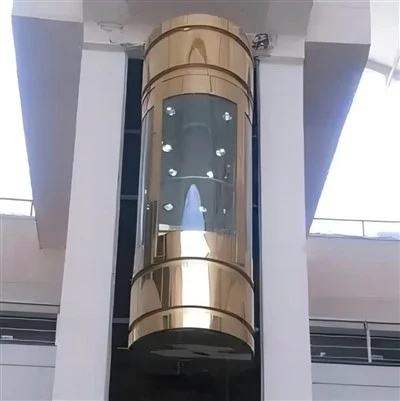
Hey there! As a supplier of passenger lifts, I often get asked a bunch of questions, and one that pops up quite a bit is, "Can a passenger lift be operated manually in case of an emergency?" Well, let's dig into this topic and find out.
First off, let's talk about the normal operation of passenger lifts. Most of the modern passenger lifts we supply, like the Automatic Passenger Elevator, are highly automated. They use advanced control systems that handle everything from opening and closing the doors to moving the lift up and down the shaft. These systems are designed to be super reliable, but we all know that emergencies can happen.
So, can they be operated manually? The answer is yes, but it's not as simple as just grabbing a lever and moving the lift around. In fact, manual operation of a passenger lift is a last - resort measure and is usually only done by trained professionals.
There are a few different scenarios where manual operation might be needed. One common situation is a power outage. If the electricity goes out, the automatic systems of the lift won't work. But most passenger lifts are equipped with a backup power source, like a battery or a generator. This backup power can keep the lift's essential functions, like lighting and communication, working for a short period. However, if the backup power fails or isn't enough, manual operation might be required.
Another scenario is when there's a malfunction in the control system. Sometimes, the electronics that control the lift can go haywire, and the lift might get stuck between floors. In such cases, manual operation can be used to move the lift to the nearest floor so that the passengers can get out safely.
Now, let's talk about how manual operation actually works. In most passenger lifts, there are manual override mechanisms. These are usually located in the machine room, which is often on the top floor or in the basement of a building. The maintenance technicians or emergency responders have to access this machine room to operate the manual controls.
The manual controls typically include a switch to release the brake and a lever to move the lift up or down. But it's not just a matter of flipping a switch and pulling a lever. The technicians have to follow a strict set of procedures to ensure the safety of everyone involved. For example, they need to make sure that the lift is not going to hit anything on its way up or down, and they have to communicate with the passengers inside the lift to let them know what's going on.
It's important to note that manual operation of a passenger lift is not something that should be attempted by untrained people. There are a lot of safety risks involved. For instance, if the brake is released incorrectly, the lift could free - fall, which would be extremely dangerous. That's why only people with the proper training and certification are allowed to operate the lift manually.
As a supplier, we make sure that all our lifts, including the External Passenger Lift and the Small Passenger Elevator, are designed with safety in mind. We install high - quality manual override mechanisms and provide detailed training to the maintenance teams of our clients.
We also offer regular maintenance services to keep the lifts in top - notch condition. During these maintenance checks, we test the manual override systems to make sure they're working properly. This way, in case of an emergency, the manual operation can be carried out smoothly.
When it comes to choosing a passenger lift for your building, it's crucial to consider the emergency features. You want a lift that has a reliable backup power source and a well - designed manual override system. Our lifts are built to meet the highest safety standards, and we're constantly improving our products to make them even safer.
If you're in the market for a passenger lift, whether it's for a small building or a large commercial complex, we've got you covered. Our team of experts can help you choose the right lift for your specific needs. We'll take into account factors like the number of floors, the expected traffic, and your budget.
Once you've chosen a lift, we'll handle the installation process with care. Our technicians are experienced and know how to install the lift in a way that ensures its proper functioning. And after the installation, we'll provide you with all the necessary training so that your staff can operate and maintain the lift safely.
In conclusion, yes, a passenger lift can be operated manually in case of an emergency, but it's a complex process that should only be done by trained professionals. As a supplier, we're committed to providing you with safe and reliable passenger lifts. If you're interested in learning more about our products or want to discuss your lift requirements, don't hesitate to reach out. We're here to help you make the best decision for your building.
References


- Industry standards for passenger lift safety
- Manufacturer's manuals for our passenger lift models