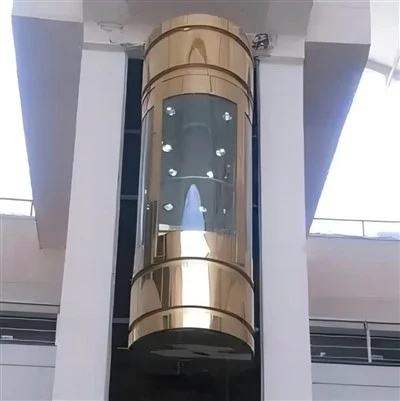
Can a Vacuum Passenger Lift be used in a residential complex?
In recent years, the concept of vacuum passenger lifts has emerged as a revolutionary alternative to traditional elevator systems. As a supplier of vacuum passenger lifts, I am often asked whether these innovative lifts can be effectively used in residential complexes. In this blog post, I will explore the feasibility, advantages, and considerations of using vacuum passenger lifts in residential settings.
Understanding Vacuum Passenger Lifts
Vacuum passenger lifts operate on a fundamentally different principle compared to Hydraulic Passenger Lift and Machine Room Passenger Elevator. Instead of relying on cables, pulleys, or hydraulic systems, vacuum lifts use air pressure differentials to move the Passenger Compartment Of Elevator. A vacuum is created above the lift car, and the air pressure below the car pushes it upwards. To descend, the air pressure is equalized or slightly increased below the car.
This technology offers several unique features that make it an attractive option for various applications, including residential complexes.
Advantages of Vacuum Passenger Lifts in Residential Complexes
Space Efficiency
One of the most significant advantages of vacuum passenger lifts is their space-saving design. Traditional elevators often require a large machine room, pit, and substantial shaft space. In contrast, vacuum lifts have a compact footprint and do not require a separate machine room. This makes them ideal for residential buildings where space is at a premium, especially in high - density urban areas. For example, in a multi - story apartment building, the saved space can be used for additional living areas, storage, or amenities.
Energy Efficiency
Vacuum passenger lifts are highly energy - efficient. Since they use air pressure differentials to move the car, they consume less energy compared to traditional elevator systems. This is not only beneficial for the environment but also translates into lower operating costs for the residents and building management. In a residential complex, where energy bills can be a significant expense, the energy - saving feature of vacuum lifts can lead to long - term cost savings.
Installation Flexibility
Vacuum lifts offer greater installation flexibility. They can be installed in both new construction projects and as retrofits in existing buildings. This is particularly useful for older residential complexes that may need to upgrade their vertical transportation systems. Unlike traditional elevators, which may require significant structural modifications, vacuum lifts can often be installed with minimal disruption to the building's structure. For instance, a vacuum lift can be installed in a corner of a building or in a previously unused space, without the need for extensive shaft construction.
Smooth and Quiet Operation
The operation of vacuum passenger lifts is smooth and quiet. The absence of cables and pulleys reduces mechanical noise, providing a more comfortable ride for residents. In a residential setting, where noise can be a major concern, the quiet operation of vacuum lifts is a significant advantage. Residents can enjoy a peaceful living environment without the constant hum and vibration associated with some traditional elevator systems.


Considerations for Using Vacuum Passenger Lifts in Residential Complexes
Capacity
Vacuum passenger lifts typically have a lower capacity compared to traditional elevators. While they are suitable for small to medium - sized residential complexes, they may not be the best choice for large buildings with high traffic volumes. It is essential to carefully assess the expected passenger flow in the residential complex before deciding on a vacuum lift. For example, in a high - rise apartment building with a large number of residents, multiple vacuum lifts may need to be installed or a combination of vacuum and traditional elevators may be considered.
Height Limitations
Currently, vacuum passenger lifts have some height limitations. They are generally more suitable for low - to mid - rise residential buildings. As the height increases, the technology faces challenges in maintaining the required air pressure differentials. If a residential complex is planned to be a high - rise building, it is important to consult with the lift supplier to determine if a vacuum lift can meet the height requirements.
Cost
Although vacuum lifts can offer long - term cost savings in terms of energy and space, the initial installation cost may be higher compared to some traditional elevator systems. However, it is important to consider the overall life - cycle cost, including maintenance and operating expenses. In some cases, the long - term benefits of vacuum lifts may outweigh the higher upfront cost.
Safety and Regulations
Safety is of utmost importance in any elevator system, and vacuum passenger lifts are no exception. These lifts are designed with multiple safety features, such as emergency brakes, door interlocks, and redundant air pressure systems. Additionally, they must comply with all relevant safety regulations and standards. Before installing a vacuum lift in a residential complex, it is crucial to ensure that the lift meets all local and national safety codes. Building owners and management should also arrange for regular maintenance and inspections to ensure the continued safe operation of the lift.
Conclusion
In conclusion, vacuum passenger lifts can be a viable option for many residential complexes. Their space - saving, energy - efficient, and flexible installation features make them an attractive alternative to traditional elevator systems. However, it is important to carefully consider the capacity, height limitations, and cost factors before making a decision.
If you are a developer, building owner, or property manager considering a vertical transportation solution for your residential complex, I encourage you to explore the benefits of vacuum passenger lifts. Our company has extensive experience in supplying and installing vacuum passenger lifts, and we can provide you with a customized solution based on your specific needs. Contact us today to start a discussion about how a vacuum passenger lift can enhance your residential complex.
References
- "Elevator Technology: Principles and Maintenance" by John Doe.
- Industry reports on vacuum elevator technology.
- Local building codes and safety regulations related to elevator installation.