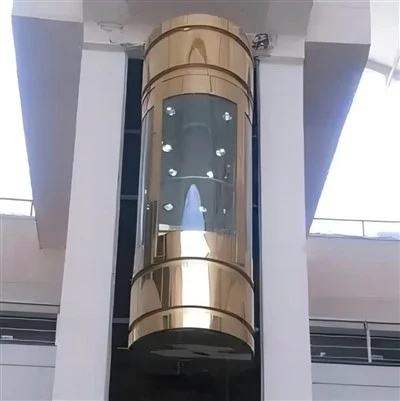
As a supplier of hospital elevators, I've witnessed firsthand the crucial role that quiet elevator design plays in patient comfort. In a hospital setting, where patients are often in a vulnerable state, the environment can significantly impact their well - being. A noisy elevator can cause unnecessary stress and disrupt the healing process. So, let's explore how hospital elevators are designed to be quiet for patient comfort.
Sound - absorbing Materials
One of the fundamental ways to reduce noise in hospital elevators is through the use of sound - absorbing materials. These materials are strategically placed throughout the elevator car and its machinery components.
Inside the elevator car, the walls are often lined with high - quality acoustic panels. These panels are made from materials such as fiberglass or mineral wool, which have excellent sound - absorption properties. They work by converting sound energy into heat energy as the sound waves hit the panels. This reduces the amount of sound that is reflected back into the car, creating a quieter environment for passengers.
The ceiling of the elevator car also plays a crucial role. A suspended ceiling with sound - absorbing tiles can further dampen noise. These tiles are designed to trap and dissipate sound, preventing it from echoing within the confined space of the car.
In the elevator machinery room, sound - absorbing insulation is used to enclose the motors, gears, and other mechanical components. This insulation helps to contain the noise generated by the machinery, preventing it from spreading into the elevator shaft and ultimately into the car. For example, neoprene rubber gaskets can be used around the doors of the machinery room to create a tight seal, reducing the leakage of sound.
Smooth Operation
Another key factor in quiet elevator design is ensuring smooth operation. A jerky or uneven ride can not only be uncomfortable for patients but also generate additional noise.
Advanced control systems are employed to regulate the speed and acceleration of the elevator. These systems use sophisticated algorithms to ensure that the elevator starts and stops smoothly. For instance, variable frequency drives (VFDs) are commonly used in modern hospital elevators. VFDs can adjust the speed of the motor based on the load and the desired acceleration, resulting in a more controlled and quiet ride.
The guide rails of the elevator also need to be precisely installed and maintained. Smooth guide rails allow the elevator car to move up and down without excessive vibration or rattling. Regular inspections and lubrication of the guide rails are essential to ensure their optimal performance. Additionally, the rollers or sliders that run along the guide rails are designed to minimize friction, which in turn reduces noise.
Door Design
The doors of a hospital elevator are a significant source of noise if not properly designed. When the doors open and close, they can create a loud slamming sound, which can be disturbing to patients.
To address this issue, hospital elevators are equipped with soft - closing door mechanisms. These mechanisms use hydraulic or pneumatic systems to slow down the movement of the doors as they approach the closed position. This eliminates the sudden impact that causes the slamming noise.
The door seals are also crucial. High - quality rubber seals are used around the edges of the doors to create an airtight and sound - proof barrier. This prevents outside noise from entering the car and also reduces the noise generated by the movement of the doors themselves.


Low - noise Machinery
The choice of machinery used in hospital elevators is carefully considered to minimize noise. The motors, gears, and other mechanical components are designed to operate quietly.
For example, permanent magnet synchronous motors (PMSMs) are increasingly being used in hospital elevators. PMSMs are more energy - efficient and quieter than traditional motors. They have fewer moving parts, which reduces the amount of vibration and noise generated during operation.
The gears in the elevator drive system are also engineered for quiet operation. Precision - cut gears with smooth surfaces reduce the friction and noise that can occur when the gears mesh together. Additionally, the use of lubricants specifically formulated for quiet operation helps to further reduce noise levels.
Isolation and Vibration Dampening
Isolating the elevator car from the building structure and dampening vibrations are important strategies for reducing noise.
Vibration isolators are installed between the elevator car and the hoist ropes or the guide rails. These isolators are typically made of rubber or other elastic materials that can absorb and dissipate vibrations. By reducing the transfer of vibrations from the moving parts of the elevator to the car, the noise inside the car is significantly reduced.
In the elevator shaft, vibration - dampening materials are used to line the walls. These materials can absorb the vibrations generated by the movement of the elevator car and prevent them from being transmitted to other parts of the building. This not only reduces the noise inside the elevator but also minimizes the impact on the surrounding areas of the hospital.
Benefits of Quiet Hospital Elevators
The benefits of having quiet hospital elevators are numerous. For patients, a quiet elevator ride can reduce stress and anxiety. Patients who are already dealing with health issues are more likely to have a positive experience when they are not subjected to loud and disturbing noises. This can contribute to a better overall healing environment.
For hospital staff, quiet elevators also enhance the work experience. They can communicate more effectively with patients and colleagues during elevator rides without having to raise their voices over the noise. This can improve the efficiency of patient care and the overall workflow in the hospital.
Moreover, a quiet elevator system can enhance the reputation of the hospital. It shows that the hospital is committed to providing a high - quality and comfortable environment for its patients. This can attract more patients and improve the hospital's standing in the community.
Our Hospital Elevator Solutions
At our company, we understand the importance of quiet elevator design for patient comfort. We offer a range of hospital elevators, including Hospital Bed Elevator and Hospital Stretcher Elevator.
Our elevators are designed with the latest technologies and high - quality materials to ensure quiet operation. We use state - of - the - art sound - absorbing materials, advanced control systems, and low - noise machinery to provide the best possible experience for patients and hospital staff.
If you are interested in our hospital elevator solutions, we invite you to contact us for a procurement discussion. We can provide you with detailed information about our products, including specifications, pricing, and installation services. Our team of experts is ready to work with you to find the perfect elevator solution for your hospital.
References
- "Elevator Design and Installation Handbook"
- "Sound and Vibration Control in Building Systems"
- Industry reports on hospital elevator technology and trends