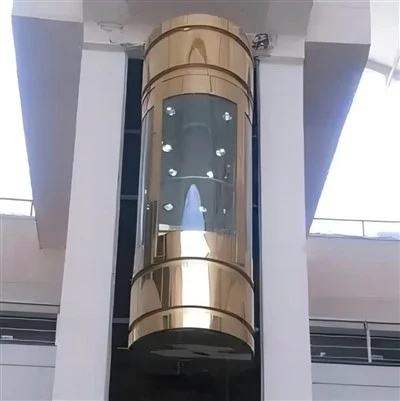
As a supplier of observation elevators, I often encounter questions from clients about how these elevators ensure the stability of the cabin during movement. Observation elevators are not only a means of vertical transportation but also a showcase of engineering excellence, offering passengers a unique view as they travel between floors. In this blog, I will delve into the various mechanisms and technologies that contribute to the stability of observation elevator cabins.
Structural Design and Materials
The foundation of a stable observation elevator cabin lies in its structural design and the materials used. Our company employs advanced computer - aided design (CAD) techniques to create a cabin structure that can withstand the forces experienced during movement. The cabin frame is typically made of high - strength steel or aluminum alloys. These materials offer a good balance between strength and weight. High - strength steel provides excellent load - bearing capacity, while aluminum alloys are lightweight, which reduces the overall weight of the elevator system and thus the energy required for operation.
The shape of the cabin also plays a crucial role in stability. A well - designed cabin has a low center of gravity. This is achieved by carefully distributing the weight of the cabin components, such as the walls, floor, and ceiling. The floor is usually made of a dense material to lower the center of gravity, which helps prevent the cabin from tipping or swaying during acceleration, deceleration, or sudden stops.
Guide Rails and Guide Shoes
Guide rails are an essential component in ensuring the stability of the elevator cabin. These vertical rails are installed along the elevator shaft and act as a track for the cabin to move up and down. Our observation elevators use high - precision guide rails that are made of high - quality steel. The rails are carefully installed and aligned to ensure a smooth and straight path for the cabin.
Guide shoes are attached to the cabin and slide along the guide rails. They are designed to maintain a close and stable contact with the guide rails. The guide shoes are usually made of materials with low friction coefficients, such as nylon or polyurethane, to reduce wear and tear and ensure a smooth movement. The design of the guide shoes also allows for a certain degree of flexibility to accommodate minor irregularities in the guide rails, while still keeping the cabin on track.
Counterweight System
A counterweight system is another key factor in maintaining the stability of the observation elevator cabin. The counterweight is a mass that is connected to the cabin by a cable or belt system. Its purpose is to balance the weight of the cabin and its passengers. In a well - designed counterweight system, the counterweight is set to be approximately equal to the weight of the empty cabin plus 40 - 50% of the maximum load capacity.
When the elevator moves, the counterweight moves in the opposite direction of the cabin. This balancing effect reduces the amount of force that the hoisting machine needs to apply to move the cabin. As a result, the movement of the cabin is more stable, and the stress on the hoisting system is reduced. The counterweight also helps to maintain a constant tension in the cables or belts, which is crucial for the smooth and stable operation of the elevator.
Hoisting and Braking Systems
The hoisting system is responsible for moving the elevator cabin up and down. Our observation elevators are equipped with advanced hoisting machines, such as traction hoists. Traction hoists use a sheave and cable system to lift and lower the cabin. The hoisting machine is designed to provide a smooth and controlled acceleration and deceleration. The motor of the hoisting machine is carefully calibrated to ensure that the speed of the cabin changes gradually, minimizing the jerks and vibrations that passengers may feel.
The braking system is equally important for stability. In case of an emergency or a power failure, the braking system must be able to stop the cabin quickly and safely. Our elevators are equipped with multiple braking mechanisms. The primary brake is usually a mechanical brake that is applied to the hoisting machine's sheave. In addition, there are safety brakes that are installed on the guide rails. These safety brakes can be activated automatically if the elevator exceeds a certain speed or if there is a problem with the hoisting system.
Control Systems
Modern observation elevators are equipped with sophisticated control systems that play a vital role in ensuring cabin stability. The control system monitors various parameters, such as the speed, position, and acceleration of the cabin. It uses sensors to collect data and then adjusts the operation of the hoisting machine and other components accordingly.


For example, if the control system detects that the cabin is accelerating too quickly, it will reduce the power supplied to the hoisting machine to slow down the acceleration. Similarly, if the cabin is swaying or vibrating, the control system can make minor adjustments to the tension in the cables or the operation of the guide shoes to correct the problem.
Vibration Damping and Noise Reduction
To further enhance the stability and comfort of the passengers, our observation elevators are equipped with vibration damping and noise reduction technologies. Vibration dampers are installed at various points in the cabin and the elevator system. These dampers absorb and dissipate the vibrations generated during movement, reducing the amount of shaking that the passengers can feel.
Noise reduction materials are also used in the construction of the cabin. The walls and ceiling of the cabin are lined with sound - absorbing materials to reduce the noise generated by the hoisting machine, the movement of the cabin, and the air flow in the elevator shaft. This creates a more comfortable and stable environment for the passengers.
Maintenance and Inspection
Regular maintenance and inspection are crucial for ensuring the long - term stability of observation elevator cabins. Our company provides comprehensive maintenance services to our clients. Our technicians conduct regular inspections of the elevator components, including the guide rails, guide shoes, counterweight system, hoisting and braking systems, and control systems.
During these inspections, any worn - out or damaged components are replaced, and the elevator is calibrated to ensure optimal performance. We also use advanced diagnostic tools to detect potential problems before they become serious. By maintaining the elevator in good condition, we can ensure that the cabin remains stable and safe for passengers.
In conclusion, ensuring the stability of the cabin during movement is a complex process that involves multiple mechanisms and technologies. As a supplier of Observation Elevator, we are committed to using the latest engineering techniques and high - quality materials to provide our clients with safe and stable observation elevators. Whether it is for a commercial building, a hotel, or a hospital, our elevators are designed to meet the highest standards of performance and reliability.
If you are interested in our Observation Elevator or other products such as Elevator for Hospital Bed and Elevator for Hospital, please feel free to contact us for more information and to discuss your specific requirements. We look forward to the opportunity to work with you and provide you with the best elevator solutions.
References
- "Elevator Technology Handbook", John Wiley & Sons
- "Modern Elevator Design and Installation", McGraw - Hill Education
- Industry standards and guidelines from the Elevator Industry Association.