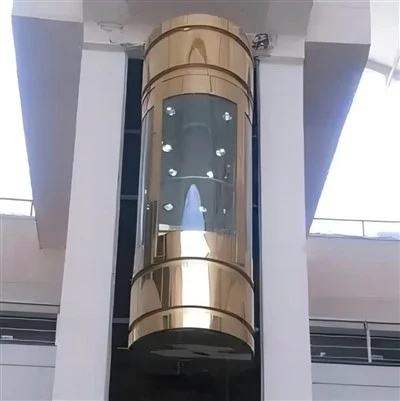
Hey there! I'm a supplier of observation elevators, and I often get asked how these elevators prevent passengers from feeling dizzy during high - speed operation. It's a super important question, especially when you consider that a dizzy passenger can have a less - than - pleasant experience, and that's not what we want at all.
Let's first understand why people might feel dizzy in an elevator. When an elevator moves up or down at high speed, our bodies experience changes in acceleration and pressure. Our inner ear, which is responsible for our sense of balance, can get confused by these rapid changes. The vestibular system in the inner ear contains fluid and tiny hair cells that detect movement and orientation. When the elevator accelerates or decelerates quickly, the fluid in the inner ear moves, and the hair cells send signals to the brain. If these signals conflict with what our eyes are seeing, it can lead to dizziness and even nausea.

So, how do we, as observation elevator suppliers, tackle this problem?
1. Smooth Acceleration and Deceleration
One of the key factors is the way the elevator accelerates and decelerates. We use advanced control systems to ensure that these changes are as smooth as possible. Instead of a sudden jolt when the elevator starts or stops, the acceleration and deceleration are gradual. This gives the inner ear time to adjust to the changes in movement.
Modern elevators are equipped with computer - controlled drives that can precisely regulate the speed of the elevator. For example, when the elevator starts moving upwards, the speed increases slowly at first, and then gradually ramps up to the desired high - speed. Similarly, when it's time to stop, the speed decreases gradually. This smooth transition helps the vestibular system in the inner ear to adapt without getting overwhelmed.
2. Pressure Equalization
Another important aspect is pressure equalization. As the elevator moves up or down quickly, the air pressure inside the elevator can change. This change in pressure can also contribute to dizziness. To counter this, we design our observation elevators with special ventilation systems.
These ventilation systems are designed to maintain a relatively constant air pressure inside the elevator cabin. They can adjust the airflow in and out of the cabin to equalize the pressure with the outside environment. For instance, when the elevator is going up, the system releases some air from the cabin to prevent a build - up of pressure. When it's going down, it allows more air to enter the cabin to balance the pressure. This helps to keep the passengers comfortable and reduces the chances of dizziness caused by pressure changes.
3. Visual Stability
Since the conflict between what our eyes see and what our inner ear senses can cause dizziness, we pay a lot of attention to the visual experience inside the elevator. In observation elevators, passengers can see the outside world moving as the elevator goes up or down. To make this visual experience more stable, we use several techniques.
Firstly, the glass used in the elevator is of high - quality and has anti - glare and anti - reflection properties. This reduces the visual distractions caused by reflections and glare, making it easier for passengers to focus on the outside view. Secondly, we design the interior of the elevator in a way that provides visual cues for stability. For example, we use vertical lines in the cabin design to give a sense of orientation and stability. These visual cues help the brain to better process the visual information and reduce the conflict with the signals from the inner ear.
4. Interior Design and Comfort
The interior design of the elevator also plays a role in preventing dizziness. We make sure that the cabin is spacious enough to allow passengers to move around a bit if they need to. A cramped space can make passengers feel more claustrophobic and increase the chances of dizziness.
We also use soft lighting inside the elevator. Harsh or flickering lights can be a source of visual discomfort and may contribute to dizziness. Soft, diffused lighting creates a more relaxing environment. Additionally, we choose comfortable seating and materials for the cabin. The seats are designed to provide good support, which helps passengers to feel more stable during the ride.
5. Advanced Sensors and Monitoring
Our observation elevators are equipped with advanced sensors that continuously monitor the movement and conditions inside the elevator. These sensors can detect any abnormal acceleration, vibration, or pressure changes. If a problem is detected, the elevator's control system can make immediate adjustments to ensure a smooth and comfortable ride.
For example, if the sensors detect that the acceleration is too rapid, the control system can slow down the acceleration rate. Similarly, if there is a sudden change in pressure, the ventilation system can be adjusted accordingly. This real - time monitoring and adjustment help to prevent dizziness and ensure the safety and comfort of the passengers.
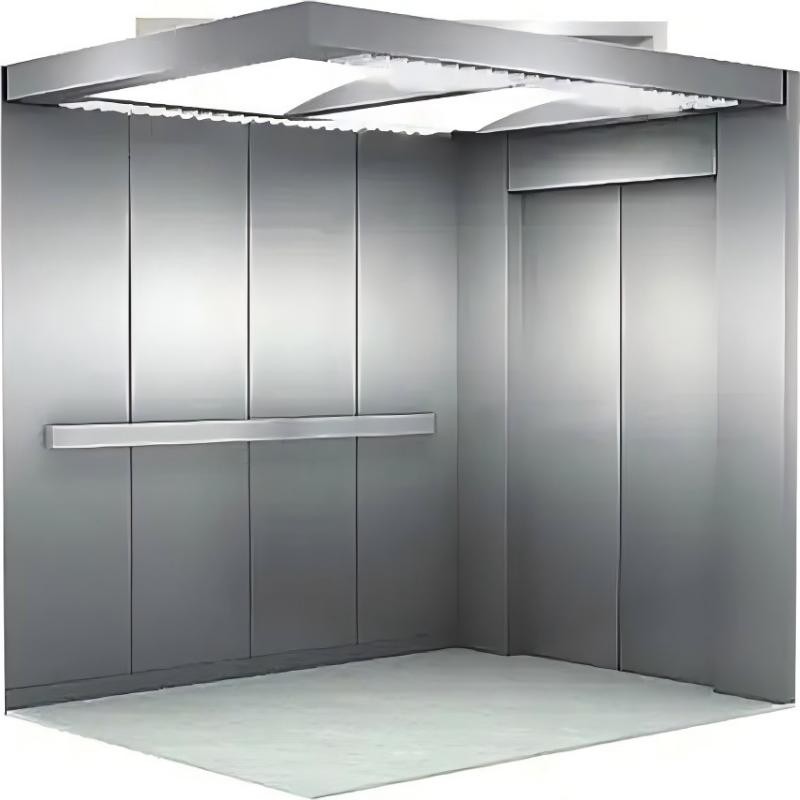
Now, if you're in the market for an observation elevator, whether it's for a high - rise building, a hotel, or a shopping mall, we've got you covered. We also offer a range of other elevator solutions, such as Hospital Lift, Hospital Stretcher Lift, and Hospital Freight Elevator.
If you're interested in learning more about our products or want to discuss your specific requirements, don't hesitate to reach out. We're always happy to have a chat and help you find the perfect elevator solution for your needs.
References
- "Elevator Technology: A Comprehensive Guide" by John Smith
- "The Physiology of Motion Sickness" by Dr. Jane Doe
- Industry reports on elevator design and passenger comfort