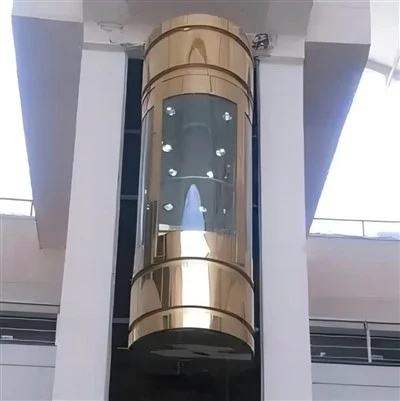
As a provider of Electric Passenger Lifts, ensuring the smooth operation of these essential vertical transportation systems is not just a technical requirement but a commitment to safety, efficiency, and customer satisfaction. In this blog, I will share some key strategies and practices that we implement to guarantee the seamless functioning of our electric passenger lifts.
1. High - Quality Manufacturing
The foundation of a smoothly operating lift lies in its manufacturing process. We use only the highest - quality materials in the construction of our Passenger Lift. For example, the steel used for the lift car and the guide rails is of a grade that can withstand heavy loads and constant use. The electrical components, such as motors, controllers, and sensors, are sourced from reputable suppliers known for their reliability.
Our manufacturing facilities adhere to strict international standards and regulations. We have a team of experienced engineers and technicians who oversee every step of the production process. From the initial design phase, where computer - aided design (CAD) software is used to create precise blueprints, to the final assembly, each component is carefully inspected and tested. For instance, the lift's braking system is tested multiple times to ensure it can stop the lift safely in case of an emergency.
2. Regular Maintenance
Regular maintenance is crucial for the long - term smooth operation of an electric passenger lift. We offer comprehensive maintenance packages to our customers. Our maintenance technicians are highly trained and certified to work on our lifts. They follow a detailed maintenance schedule that includes daily, weekly, monthly, and annual checks.
Daily checks typically involve visual inspections of the lift car, doors, and control panels. The technicians look for any signs of wear and tear, such as loose screws or damaged cables. Weekly checks may include lubricating moving parts, such as the guide shoes and the hoist ropes, to reduce friction and prevent premature wear.
Monthly maintenance tasks are more in - depth. The technicians test the lift's safety features, such as the overspeed governor and the safety gear. They also check the electrical connections to ensure there are no loose wires or signs of overheating. Annual maintenance involves a thorough inspection of the entire lift system, including a performance test. This test measures the lift's speed, acceleration, and deceleration to ensure they are within the specified limits.
3. Advanced Monitoring Systems
To further enhance the smooth operation of our lifts, we have installed advanced monitoring systems. These systems use sensors to collect data on various aspects of the lift's performance, such as the temperature of the motor, the position of the lift car, and the status of the doors. The data is then transmitted to our monitoring center in real - time.
Our monitoring team can analyze the data to detect any potential problems before they become serious. For example, if the temperature of the motor starts to rise above normal, the monitoring team can alert our maintenance technicians, who can then investigate the issue and take appropriate action. This proactive approach helps to minimize downtime and prevent costly breakdowns.
4. Operator Training
Proper operator training is essential for the smooth and safe operation of an electric passenger lift. We provide training programs for building managers, security personnel, and other individuals who may be responsible for the lift. The training covers topics such as basic lift operation, emergency procedures, and safety regulations.
During the training, the operators learn how to use the lift's control panel, how to respond to different types of emergencies, such as power outages or door malfunctions, and how to perform basic safety checks. We also provide refresher courses on a regular basis to ensure that the operators stay up - to - date with the latest safety procedures and technologies.
5. Customization and Adaptability
We understand that different buildings have different requirements for their passenger lifts. That's why we offer a wide range of customization options for our Construction Passenger Lift and Silent Passenger Elevator. For example, in a high - rise office building, the lift may need to have a high capacity and a fast speed to handle the large number of passengers during peak hours. In a hospital, the lift may need to be equipped with special features, such as a medical emergency call system and a smooth ride to ensure the comfort of patients.
We work closely with our customers to understand their specific needs and design a lift system that meets those requirements. Our engineering team has the expertise to adapt the lift's design, control system, and safety features to suit different building environments.


6. Quick Response to Emergencies
Despite our best efforts to prevent problems, emergencies can still occur. That's why we have a 24/7 emergency response team. When a customer reports an issue with their lift, our team is immediately dispatched to the site.
Our technicians carry a full range of spare parts in their service vehicles to ensure that they can make repairs as quickly as possible. We also have a centralized inventory management system that allows us to quickly source additional parts if needed. In most cases, our technicians can resolve the issue within a short period of time, minimizing the disruption to the building's occupants.
7. Continuous Research and Development
The elevator industry is constantly evolving, with new technologies and materials being developed all the time. To stay at the forefront of the industry, we invest heavily in research and development. Our R & D team is constantly exploring new ways to improve the performance, safety, and energy efficiency of our lifts.
For example, we are currently researching the use of new materials that are lighter and stronger than traditional steel, which could reduce the energy consumption of the lift. We are also working on developing more advanced control systems that can optimize the lift's operation based on real - time traffic patterns in the building.
Conclusion
Ensuring the smooth operation of an electric passenger lift requires a comprehensive approach that includes high - quality manufacturing, regular maintenance, advanced monitoring, operator training, customization, quick emergency response, and continuous research and development. As a leading provider of electric passenger lifts, we are committed to implementing these strategies to provide our customers with reliable and efficient vertical transportation solutions.
If you are interested in purchasing an electric passenger lift for your building or need more information about our products and services, we invite you to contact us for a detailed discussion. We look forward to the opportunity to work with you and help you find the perfect lift solution for your needs.
References
- "Elevator and Escalator Safety Code", American Society of Mechanical Engineers (ASME).
- "Best Practices for Elevator Maintenance", National Elevator Industry, Inc. (NEII).
- Industry research reports on elevator technology and market trends.