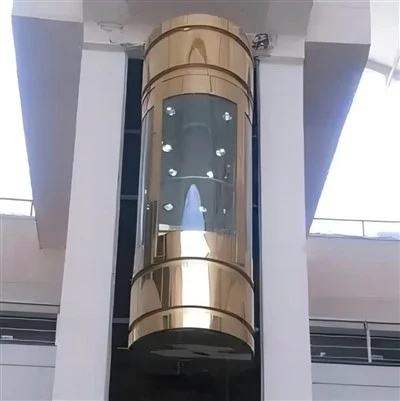
Hey there! I'm a supplier of observation elevators, and I'm stoked to take you behind the scenes to explore how these amazing contraptions work. Observation elevators are not just a means of getting from one floor to another; they're a thrilling experience that offers breathtaking views as you ascend or descend. So, let's dive right in!
The Basics of an Observation Elevator
First off, what exactly is an observation elevator? Well, it's a type of elevator that has at least one wall made of glass or a transparent material, allowing passengers to enjoy the surrounding scenery while they travel. These elevators are commonly found in tall buildings, hotels, shopping malls, and other tourist attractions where the view is part of the draw.
At the heart of every observation elevator is a complex system of components that work together to ensure a safe and smooth ride. The main parts include the elevator car, the hoistway, the counterweight, the cables or belts, the motor, and the control system.
The Elevator Car
The elevator car is the part where passengers stand or sit during the ride. It's designed to be comfortable and spacious, with features like air conditioning, lighting, and emergency communication systems. In an observation elevator, the car is usually made with a large glass panel on one or more sides, providing an unobstructed view of the outside.
The car is supported by a set of guide rails that run along the hoistway. These rails keep the car in place and prevent it from swaying or tilting during the ride. The car also has a set of doors that open and close automatically when the elevator reaches a floor.
The Hoistway
The hoistway is the vertical shaft that the elevator car travels in. It's typically made of steel or concrete and is lined with guide rails to keep the car on track. The hoistway also contains the cables or belts that lift and lower the elevator car, as well as the counterweight.
The counterweight is a heavy mass that is connected to the elevator car by the cables or belts. Its purpose is to balance the weight of the car and its passengers, making it easier for the motor to lift and lower the car. By using a counterweight, the elevator system can operate more efficiently and use less energy.
The Cables or Belts
The cables or belts are the lifelines of the elevator system. They're made of strong, flexible materials like steel or synthetic fibers and are designed to support the weight of the elevator car and its passengers. In most observation elevators, the cables or belts are connected to a sheave, which is a large pulley that is driven by the motor.
As the motor turns the sheave, the cables or belts move, causing the elevator car to rise or fall. The cables or belts are also equipped with safety features like overspeed governors and tension sensors to prevent accidents.
The Motor
The motor is the power source of the elevator system. It's typically an electric motor that is controlled by the elevator's control system. The motor is responsible for turning the sheave, which in turn moves the cables or belts and lifts or lowers the elevator car.
In modern observation elevators, the motor is often a high-efficiency, variable-speed motor that can adjust its speed based on the load and the desired travel speed. This allows the elevator to operate smoothly and quietly, while also saving energy.
The Control System
The control system is the brain of the elevator system. It's responsible for managing the operation of the elevator, including starting and stopping the motor, opening and closing the doors, and responding to passenger requests. The control system uses a combination of sensors, switches, and computer algorithms to ensure that the elevator operates safely and efficiently.


In an observation elevator, the control system may also be programmed to provide additional features like scenic tours or special lighting effects. For example, the elevator may slow down or stop at certain floors to allow passengers to enjoy the view, or it may change the lighting inside the car to create a more dramatic atmosphere.
Safety Features
Safety is always a top priority when it comes to elevators, and observation elevators are no exception. These elevators are equipped with a variety of safety features to protect passengers in case of an emergency. Some of the most common safety features include:
- Overspeed governors: These devices are designed to detect when the elevator is traveling too fast and automatically stop the elevator if necessary.
- Emergency brakes: In the event of a power failure or other emergency, the elevator's emergency brakes will engage to stop the elevator car and prevent it from falling.
- Safety sensors: The elevator doors are equipped with sensors that detect when an object is blocking the door and prevent the doors from closing on the object.
- Emergency communication systems: Every elevator car is required to have an emergency communication system that allows passengers to contact the building's management or emergency services in case of an emergency.
Maintenance and Inspection
To ensure the safety and reliability of an observation elevator, it's important to perform regular maintenance and inspections. Elevators should be inspected by a qualified technician at least once a year, and more frequently if the elevator is used heavily or in a high-traffic area.
During a maintenance inspection, the technician will check the elevator's components for wear and tear, lubricate moving parts, and test the safety features to make sure they're working properly. Any necessary repairs or replacements will be made to keep the elevator in good working condition.
Conclusion
Well, there you have it! That's a basic overview of how an observation elevator works. As you can see, these elevators are a fascinating combination of engineering and technology, designed to provide a safe and enjoyable ride for passengers while offering stunning views of the surrounding scenery.
If you're interested in purchasing an observation elevator for your building or project, I'd love to hear from you. We offer a wide range of observation elevators in different sizes, styles, and configurations to meet your specific needs. Whether you're looking for a small elevator for a residential building or a large elevator for a commercial complex, we have the expertise and experience to help you find the perfect solution.
So, don't hesitate to contact us today to learn more about our observation elevators and to discuss your project requirements. We look forward to working with you!
References
- Elevator World Magazine
- National Elevator Industry, Inc. (NEII)
- American Society of Mechanical Engineers (ASME) A17.1 Elevator and Escalator Safety Code