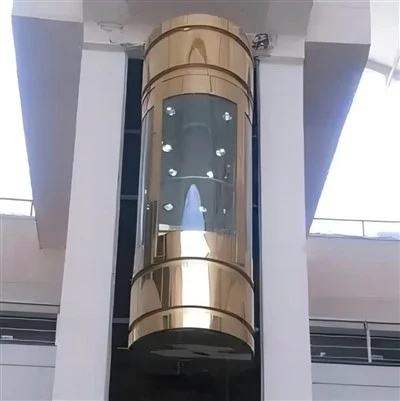
Hey there! I'm part of a single passenger lift supplier team, and today I wanna break down how the call - button system in a single passenger lift works. It's actually pretty interesting, and understanding it can give you a better idea of how these nifty little elevators operate.
First off, let's talk about the basic setup. A single passenger lift is designed for, well, one person at a time. It's great for homes, small offices, or other places where you don't need a big, multi - person elevator. You can check out more about Passenger Lift for Homes on our website.
The call - button system is the heart of how a passenger requests the lift. There are usually two main types of call buttons: the hall call buttons and the car call buttons.
Hall Call Buttons
The hall call buttons are located outside the lift on each floor. They're what you use when you're standing in the hallway and you want the lift to come to your floor. There are typically two buttons: one for "up" and one for "down". When you press the "up" button, you're telling the lift that you want to go to a higher floor. Conversely, pressing the "down" button means you want to head to a lower floor.
Let's say you're on the first floor and you want to go to the third floor. You'll press the "up" button. Once you hit that button, a signal is sent to the lift's control system. This control system is like the brain of the lift. It's constantly monitoring the position of the lift, as well as all the requests that have been made.
The control system checks the current location of the lift. If the lift is on a lower floor and is going up, it will add your floor to its list of stops. If the lift is on a higher floor and coming down, it might not stop at your floor right away. Instead, it will finish its current trip and then come back up to pick you up.


Car Call Buttons
Now, let's move inside the Passenger Compartment Of An Elevator. Once you're inside the lift, you'll see a panel of buttons. These are the car call buttons. Each button corresponds to a different floor. If you want to go to the fifth floor, you simply press the button labeled "5".
When you press a car call button, a signal is also sent to the control system. The control system then updates its list of stops. It takes into account the direction the lift is moving and the order in which the floors were selected. For example, if you're going up and someone on the second floor also presses the "up" button, and you've pressed the "5" button, the lift will first stop at the second floor to pick up that person and then continue on to the fifth floor.
How the Control System Prioritizes Requests
The control system uses a set of algorithms to prioritize requests. It tries to be as efficient as possible, minimizing the time passengers have to wait. One of the key factors it considers is the direction of the lift. If the lift is going up, it will first serve all the "up" requests on the floors it passes before changing direction.
Another factor is the distance. The control system will usually try to serve the closest request first. So, if there are requests on the second and fourth floors and the lift is on the third floor and going up, it will stop at the fourth floor first because it's closer in the direction of travel.
Safety Features in the Call - Button System
Safety is always a top priority when it comes to elevators. The call - button system has several safety features built in. For example, if a button gets stuck or malfunctions, the control system can detect it. It will usually send an error signal and may even stop the lift in a safe location until the issue is resolved.
There are also emergency buttons in both the hall and the car. In the car, there's typically an emergency call button that connects you to a monitoring center. If something goes wrong, like the lift gets stuck between floors, you can press this button to get help.
Modern Advancements in Call - Button Systems
These days, call - button systems are getting more and more advanced. Some single passenger lifts now have touch - screen call buttons. This makes it easier to select floors, especially in lifts with a lot of floors. You can just tap on the floor number you want, and the signal is sent to the control system.
There are also destination - dispatch systems. Instead of just pressing "up" or "down" on the hall, you enter your destination floor right away. The control system then assigns you to the most appropriate lift. This can significantly reduce waiting times, especially in buildings with multiple lifts.
Our Small Passenger Elevator Offerings
We're really proud of our Small Passenger Elevator range. Our lifts are designed with the latest technology, including state - of - the - art call - button systems. They're not only efficient but also very safe.
If you're thinking about installing a single passenger lift in your home or small office, our call - button systems are easy to use and reliable. We've spent a lot of time perfecting them to ensure a smooth and hassle - free experience for our customers.
Why Choose Our Single Passenger Lifts
Our single passenger lifts are a great choice for several reasons. Firstly, they're cost - effective. Since they're designed for one person, they're smaller and require less energy to operate. This means lower installation and running costs.
Secondly, they're easy to install. Our team of experts can get your lift up and running in no time. And because our call - button systems are so reliable, you won't have to worry about frequent breakdowns.
Contact Us for a Quote
If you're interested in our single passenger lifts and want to learn more about the call - button system or any other features, we'd love to hear from you. Whether you're a homeowner looking to add a lift to your property or a business owner in need of a small elevator for your office, we can provide you with a customized solution.
Just reach out to us, and our sales team will be happy to discuss your requirements, give you a detailed quote, and answer any questions you might have. Investing in a single passenger lift can really enhance the functionality and value of your property. So, don't hesitate to get in touch and start the conversation about bringing one of our amazing lifts into your space.
References
- Elevator Handbook, Second Edition by Wolfgang A. Halang
- Principles of Elevator Transportation by W. A. Halang and J. M. M. van Baren