Hey there! I'm a supplier of freight elevators, and today I wanna chat about how the weight - capacity rating of a freight elevator changes with height. It's a topic that's super important for anyone in the business of moving heavy stuff up and down in buildings, whether it's for industrial or commercial use.
First off, let's understand what weight - capacity rating means. It's basically the maximum amount of weight that an elevator can safely carry. When you're dealing with freight elevators, this number can make or break your operations. You don't wanna overload an elevator and risk damage or, even worse, an accident.
Now, how does height come into play? Well, as the height of the elevator shaft increases, a bunch of factors start to affect the weight - capacity rating. One of the main things is the strength of the cables and the hoisting mechanism. You see, the higher the elevator has to go, the more stress is placed on these components. The cables have to support not only the weight of the load but also their own weight over a greater distance.
Imagine you're pulling a heavy rope up a long staircase. The longer the staircase, the harder it gets to pull the rope, right? It's the same principle with elevator cables. As the height increases, the cables need to be stronger to handle the extra stress. And if the cables can't handle the load, the weight - capacity rating has to be lowered to keep everything safe.
Another factor is the power of the motor. A freight elevator needs a powerful motor to lift heavy loads. When the elevator has to travel a greater height, the motor has to work harder for a longer time. This means that the motor might not be able to lift as much weight as it could for a shorter distance. For example, a motor that can lift a 5 - ton load over a 10 - story building might only be able to lift a 3 - ton load over a 30 - story building.
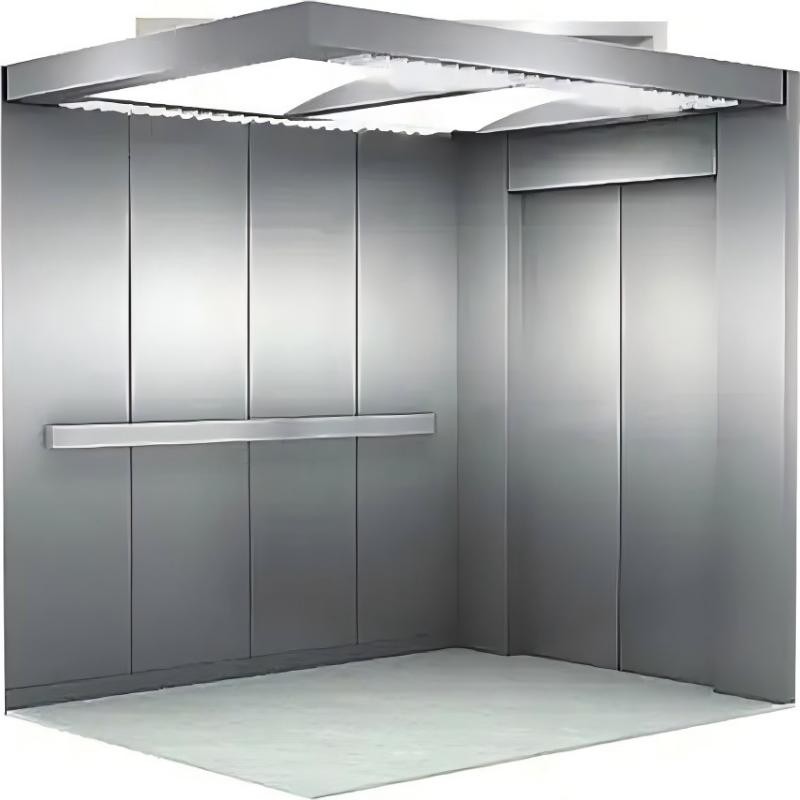
The design of the elevator car also plays a role. Cabin Of A Small Freight Elevator needs to be sturdy enough to hold the load, but as the height increases, the forces acting on the car change. There's more pressure on the bottom and sides of the car, and it has to be built to withstand these forces. If the car isn't strong enough, the weight - capacity rating has to be adjusted.
Let's talk about the impact of height on different types of freight elevators. Industrial Elevator And Lift are often used in factories and warehouses, where heavy machinery and large quantities of goods need to be moved. In an industrial setting, the height of the building can vary a lot. For a low - rise industrial building, say up to 3 stories, the weight - capacity rating might not be affected too much by height. The cables and motor can handle the load without too much trouble.
But in a high - rise industrial building, like a multi - story factory, the weight - capacity rating will definitely be lower compared to a low - rise one. The extra height means more stress on the components, and the elevator has to be designed accordingly.
On the other hand, Commercial Freight Elevator are used in places like shopping malls, hotels, and office buildings. These elevators usually have to meet certain safety standards. As the height of the building increases, the safety requirements become more strict. This often leads to a lower weight - capacity rating to ensure the safety of the passengers and the building.
So, how do we deal with these challenges? As a freight elevator supplier, I know that proper design and engineering are key. When designing an elevator for a tall building, we use stronger cables, more powerful motors, and sturdier elevator cars. We also conduct a lot of tests to make sure that the elevator can handle the weight - capacity rating at the given height.
We use advanced computer simulations to model the forces acting on the elevator components. This helps us to predict how the elevator will perform under different conditions. For example, we can simulate how the cables will stretch and how the motor will respond to different loads at different heights.
Regular maintenance is also crucial. Elevators in tall buildings need to be inspected and maintained more frequently. The cables need to be checked for wear and tear, and the motor needs to be serviced to keep it running smoothly. If any issues are found, the weight - capacity rating might need to be adjusted until the problem is fixed.
Now, if you're in the market for a freight elevator, it's important to consider the height of your building and the weight - capacity rating you need. Don't just go for the cheapest option. Make sure that the elevator is designed to handle the height and the load. You don't wanna end up with an elevator that can't do the job or, even worse, one that's a safety hazard.
If you have any questions about freight elevators, especially in relation to height and weight - capacity rating, feel free to reach out. I'm here to help you find the right elevator for your needs. Whether it's an Industrial Elevator And Lift for your factory or a Commercial Freight Elevator for your business, I can provide you with the best solutions.
Let's work together to make sure your vertical transportation needs are met safely and efficiently. Contact me to start the conversation about your freight elevator requirements and let's find the perfect fit for your project.

References
- "Elevator Technology Handbook" by Peter D. Caporale
- "Fundamentals of Vertical Transportation" by The National Association of Elevator Contractors