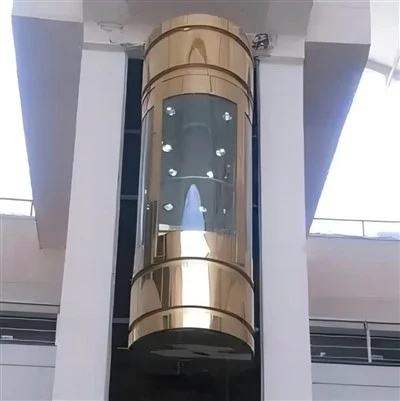
Hey there! As a supplier of single passenger lifts, I've been getting a lot of questions about the different suspension systems available. So, I thought I'd write a blog post to break it down for you.
Let's start with the basics. A suspension system in a single passenger lift is what holds the lift car and moves it up and down. It's a crucial part of the lift, as it affects the safety, performance, and comfort of the ride. There are several types of suspension systems, and each has its own pros and cons.
Rope - Driven Suspension Systems
One of the most common suspension systems for single passenger lifts is the rope - driven system. In this setup, steel ropes are used to suspend the lift car. These ropes are attached to a counterweight on one end and the lift car on the other. The ropes run over a traction sheave, which is driven by a motor. When the motor turns the sheave, the ropes move, and the lift car goes up or down.
The advantage of a rope - driven system is its efficiency. It can move the lift car quickly and smoothly, making it a great choice for buildings where speed is important. Also, rope - driven lifts are generally more energy - efficient compared to some other types. They can handle a decent amount of weight, which is good for single passenger lifts that might need to carry a person along with some small items.
However, there are some downsides. Rope - driven systems require regular maintenance. The ropes can wear out over time, and if they're not inspected and replaced when needed, it can be a safety hazard. Also, the initial installation cost of a rope - driven lift can be relatively high.
If you're interested in a smooth - riding single passenger lift, you might want to check out our Silent Passenger Elevator. It often uses a high - quality rope - driven suspension system to ensure a quiet and efficient ride.
Hydraulic Suspension Systems
Another popular option is the hydraulic suspension system. In a hydraulic lift, a piston is used to move the lift car up and down. The piston is powered by hydraulic fluid, which is pumped into a cylinder. When the fluid is pumped into the cylinder, the piston rises, lifting the lift car. To lower the lift car, the fluid is released back into a reservoir.
Hydraulic lifts are known for their reliability. They can handle heavy loads well, and they're relatively easy to install, especially in low - rise buildings. They're also very stable, providing a comfortable ride. And the maintenance of hydraulic systems is often less complex compared to rope - driven systems in some aspects.
But there are a few things to consider. Hydraulic lifts are generally slower than rope - driven lifts. They also use more energy, especially when the lift is going up. And over time, the hydraulic fluid can leak, which not only creates a mess but can also be a safety issue if not addressed.
Our Hydraulic Passenger Lift is a great example of a single passenger lift that uses a hydraulic suspension system. It's perfect for buildings where a slower but reliable lift is needed.
Traction - Based Suspension Systems
Traction - based suspension systems are similar to rope - driven systems, but they have some unique features. In a traction - based system, the friction between the ropes and the traction sheave is what moves the lift car. The motor drives the sheave, and the ropes grip the sheave to lift or lower the car.
These systems are known for their high - speed capabilities. They can move the lift car very quickly, making them suitable for tall buildings. They're also very precise in terms of positioning the lift car at each floor. Traction - based lifts can be very energy - efficient, especially when they use regenerative drives that can capture and reuse energy when the lift is going down.
On the flip side, traction - based systems are more complex and expensive to install. They also require a machine room to house the motor and other equipment, which can take up valuable space in a building.
Belt - Driven Suspension Systems
Belt - driven suspension systems are a newer option in the world of single passenger lifts. Instead of ropes, they use belts made of high - strength materials like carbon fiber. These belts are lighter and quieter than ropes, which means a more comfortable and less noisy ride.
Belt - driven systems are also very energy - efficient. They require less maintenance compared to rope - driven systems because the belts don't stretch or wear out as quickly. And since the belts are lighter, the lift doesn't need as much power to move.


However, belt - driven systems are still relatively new, and not all buildings are suitable for them. They might not be able to handle extremely heavy loads, and the initial cost of the belts and the associated equipment can be high.
If you're looking for a small and efficient single passenger lift, our Small Passenger Elevator might be a good fit. It could potentially use a belt - driven suspension system for a quiet and energy - saving operation.
Choosing the Right Suspension System
So, how do you choose the right suspension system for your single passenger lift? Well, it depends on several factors.
First, think about the building. If it's a tall building, a rope - driven or traction - based system might be the best choice because of their speed capabilities. For a low - rise building, a hydraulic system could be a great option due to its reliability and ease of installation.
Next, consider your budget. The initial installation cost, as well as the long - term maintenance cost, are important. If you're on a tight budget, a hydraulic lift might be more affordable upfront, but you need to factor in the higher energy costs over time.
Also, think about the usage. If the lift will be used frequently, you'll want a system that's durable and requires less maintenance. And if noise is a concern, a belt - driven or rope - driven system with good insulation might be the way to go.
As a single passenger lift supplier, I'm here to help you make the right decision. We have a wide range of lifts with different suspension systems to meet your needs. Whether you're looking for speed, reliability, energy efficiency, or a quiet ride, we've got you covered.
If you're interested in learning more about our single passenger lifts or want to discuss which suspension system is best for your project, don't hesitate to reach out. We can have a detailed chat about your requirements and help you find the perfect lift for your building.
In conclusion, each suspension system has its own strengths and weaknesses. By understanding these differences and considering your specific needs, you can choose the single passenger lift that's right for you.
References
- Elevator Handbook, Second Edition by Andreas K. Moser
- Understanding Elevator Technology by Terry L. Kissel