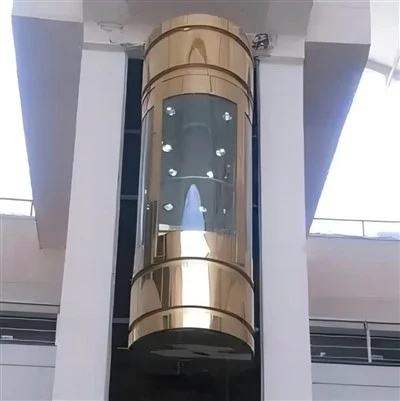
Hey there! As a supplier of passenger elevators, I've been getting a lot of questions lately about vibration control in these elevators. It's a crucial aspect that can significantly impact the comfort and safety of passengers. So, I thought I'd share some of the key vibration - control measures we use in our passenger elevators.
Understanding the Causes of Vibration in Passenger Elevators
Before we dive into the control measures, it's important to understand what causes vibrations in the first place. There are several factors that can lead to elevator vibrations.
Mechanical issues are a major culprit. For example, worn - out bearings in the hoisting machine can cause uneven rotation, leading to vibrations. Misaligned belts or chains can also create vibrations as the elevator moves up and down. The guide rails play a vital role too. If they are not installed correctly or are damaged, the elevator car can experience jolts and vibrations during its operation.
Electrical problems can contribute as well. Fluctuations in the power supply can cause the motor to run erratically, resulting in vibrations. Faulty electrical components, such as capacitors or relays, can also disrupt the smooth operation of the elevator and lead to unwanted vibrations.
Vibration - Control Measures
1. High - Quality Components
One of the most basic yet effective ways to control vibrations is by using high - quality components. When we build our Machine Room Passenger Elevator, we make sure to source top - notch parts. For the hoisting machine, we use bearings that are designed to withstand high loads and provide smooth rotation. These bearings are made from high - grade materials and are precision - engineered to minimize friction and vibration.
The guide rails are another critical component. We use heavy - duty, precision - machined guide rails that are properly installed and aligned. This ensures that the elevator car moves smoothly along the rails without any unnecessary vibrations. The belts and chains we use are also of high quality, with proper tensioning mechanisms to prevent misalignment and vibration.
2. Isolation Systems
Isolation systems are a great way to reduce the transfer of vibrations from the elevator machinery to the car. We install rubber or spring isolators between the hoisting machine and its mounting base. These isolators absorb and dampen the vibrations generated by the machine, preventing them from being transmitted to the rest of the elevator structure.
In the elevator car, we also use isolation materials. The floor of the Passenger Compartment Of An Elevator is often lined with vibration - absorbing materials such as rubber mats or special foam. This helps to reduce the impact of vibrations on the passengers' feet and provides a more comfortable ride.
3. Advanced Control Systems
Our elevators are equipped with advanced control systems that play a crucial role in vibration control. These systems continuously monitor the elevator's operation and make real - time adjustments to minimize vibrations. For example, the speed control system can adjust the acceleration and deceleration rates of the elevator to ensure a smooth start and stop.
The position control system is also important. It precisely controls the position of the elevator car within the shaft, reducing the chances of it hitting the guide rails or other components and causing vibrations. These control systems use sensors to detect any abnormal vibrations and can take corrective actions, such as adjusting the motor speed or realigning the car.
4. Regular Maintenance
Regular maintenance is essential for keeping vibrations in check. We recommend that our customers schedule regular maintenance checks for their Commercial Passenger Elevators. During these maintenance visits, our technicians inspect all the components of the elevator, including the hoisting machine, guide rails, belts, and electrical systems.
They check for any signs of wear and tear, such as worn - out bearings or loose bolts. If any issues are detected, they are immediately repaired or replaced. Lubrication is also an important part of maintenance. Proper lubrication of moving parts reduces friction and helps to prevent vibrations.
5. Dynamic Balancing
Dynamic balancing is a technique used to ensure that the rotating parts of the elevator, such as the hoisting machine's motor and pulley, are balanced. Unbalanced rotating parts can cause significant vibrations. Our technicians use specialized equipment to measure the imbalance of these parts and then add or remove weights to achieve a balanced state.
This process helps to reduce the vibrations generated by the rotating components and ensures a smoother operation of the elevator. It's a precise and important step in the installation and maintenance of our elevators.
Benefits of Effective Vibration Control
Implementing these vibration - control measures offers several benefits. Firstly, it improves the comfort of passengers. A smooth - riding elevator means a more pleasant experience for people using it, whether it's in a commercial building, a hotel, or a residential complex.
Secondly, it enhances the safety of the elevator. Excessive vibrations can cause components to loosen or wear out faster, increasing the risk of mechanical failures. By controlling vibrations, we can extend the lifespan of the elevator and reduce the likelihood of breakdowns.
Finally, it also helps to reduce noise. Vibrations often generate noise, and by minimizing vibrations, we can create a quieter elevator environment. This is especially important in buildings where noise reduction is a priority, such as hospitals or libraries.
Conclusion
Vibration control is a critical aspect of passenger elevator design and operation. As a supplier, we are committed to using the latest technologies and best practices to ensure that our elevators provide a smooth, comfortable, and safe ride. By using high - quality components, isolation systems, advanced control systems, regular maintenance, and dynamic balancing, we can effectively control vibrations in our passenger elevators.
If you're in the market for a passenger elevator and are concerned about vibration control, we'd love to have a chat with you. We can provide you with more detailed information about how our elevators are designed to minimize vibrations and offer a great passenger experience. Don't hesitate to reach out to us to start a conversation about your elevator needs.


References
- "Elevator Technology Handbook" by John J. Bachmann
- "Guide to Elevator and Escalator Safety" by National Fire Protection Association
- Various industry research papers on elevator vibration control.