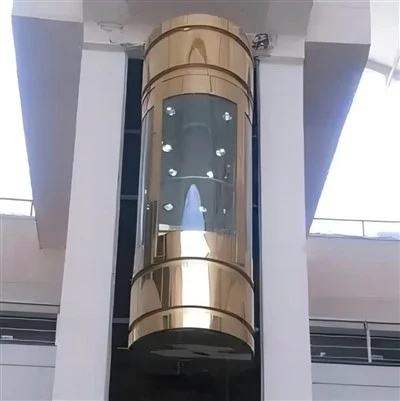
As a supplier of observation elevators, I've had the privilege of being deeply involved in the intricate world of elevator design, especially when it comes to the control panel. The control panel of an observation elevator is not just a functional component; it's a crucial interface that combines user - friendliness, safety, and aesthetics to enhance the overall elevator experience.
Functionality of the Control Panel
The primary function of the control panel in an observation elevator is to allow passengers to select their desired floors. This may seem straightforward, but there's a lot more to it. Modern control panels are equipped with advanced touch - screen technology or illuminated buttons. Touch - screen panels offer a sleek and intuitive way for passengers to input their floor requests. They can also display additional information such as the elevator's current position, direction of travel, and estimated arrival time at the destination floor.
For example, a well - designed touch - screen control panel can have a large, easy - to - read display. It can be programmed to adjust the brightness according to the lighting conditions inside the elevator car. In a brightly lit environment, the screen will be brighter, while in a dimly lit setting, it will reduce its brightness to prevent glare.
Illuminated buttons, on the other hand, have their own charm. They are simple and reliable. When a passenger presses a button, it lights up to confirm the selection. This immediate feedback is reassuring, especially for passengers who may be less tech - savvy.
Another important functionality is the emergency communication system. In case of an emergency, passengers can use the control panel to communicate with the building's management or the elevator maintenance team. This usually consists of a dedicated emergency button that, when pressed, connects the elevator car to a central monitoring station. The communication can be in the form of voice or text, depending on the system's design.
Safety Features in the Control Panel
Safety is of utmost importance in any elevator system, and the control panel plays a significant role in ensuring it. One of the key safety features is the door control. The control panel has buttons or sensors that allow passengers to open and close the elevator doors. These controls are designed to prevent the doors from closing on passengers. For instance, there are infrared sensors that detect any obstruction in the door path. If an object or a person is detected, the doors will automatically reopen.
There are also safety locks on the control panel. These locks are used by maintenance personnel to disable certain functions during maintenance or repair work. This ensures that the elevator is not operated in an unsafe condition.
In addition, the control panel is connected to the elevator's safety monitoring system. It can detect faults such as over - speed, under - speed, or abnormal vibrations. If a fault is detected, the control panel will trigger an alarm and may even stop the elevator at the nearest floor and open the doors to allow passengers to exit safely.
Aesthetics and Design
Since observation elevators are often installed in high - end buildings, hotels, or shopping malls, the aesthetics of the control panel are crucial. The design should blend in with the overall interior design of the elevator car.
The materials used for the control panel can vary widely. High - quality plastics, stainless steel, and glass are commonly used. Stainless steel gives a modern and durable look, while glass can create a sleek and luxurious appearance.
The layout of the control panel is also carefully considered. The buttons or touch - screen elements should be arranged in a logical and easy - to - reach manner. For example, the emergency button is usually placed in a prominent location, such as at the bottom or top of the panel, so that it can be easily accessed in an emergency.
Integration with Other Systems
The control panel of an observation elevator can be integrated with other building systems. For example, it can be connected to the building's access control system. This means that only authorized personnel can access certain floors. In a hospital setting, for example, the elevator can be programmed so that only doctors, nurses, and patients with the appropriate access cards can reach the restricted areas such as the intensive care unit.
It can also be integrated with the building's fire alarm system. In case of a fire, the elevator will automatically return to the ground floor and open the doors, allowing passengers to evacuate safely.
Customization Options
As a supplier, we understand that different customers have different requirements. That's why we offer a wide range of customization options for the control panel.
Customers can choose the color, shape, and size of the control panel to match their building's interior design. They can also add custom logos or branding elements to the panel.
In addition, we can customize the functionality of the control panel according to the specific needs of the customer. For example, in a large shopping mall, the control panel can be programmed to display information about the stores on each floor, such as their opening hours and special offers.


Comparison with Other Types of Elevators
Compared to standard elevators, observation elevators often have more advanced control panels. Standard elevators may focus more on basic functionality, while observation elevators need to combine functionality with aesthetics and user - experience.
For hospital elevators such as Elevator for Hospital Bed, Bed Elevator In Hospital, and Hospital Stretcher Lift, the control panels are designed with specific medical requirements in mind. They may have larger buttons for easy operation by medical staff wearing gloves, and additional functions such as emergency stops that are more accessible during critical situations.
Future Trends in Control Panel Design
The future of control panel design for observation elevators looks promising. With the advancement of technology, we can expect more intelligent control panels. For example, voice - activated controls are becoming more common. Passengers will be able to simply say the floor number they want to go to, and the elevator will respond accordingly.
Artificial intelligence can also be integrated into the control panel. It can analyze passenger traffic patterns and optimize the elevator's operation. For example, during peak hours, it can adjust the elevator's speed and stopping pattern to reduce waiting times.
Conclusion
The control panel of an observation elevator is a complex and important component. It combines functionality, safety, aesthetics, and integration with other systems to provide a seamless elevator experience. As a supplier, we are constantly innovating and improving our control panel designs to meet the ever - changing needs of our customers.
If you are interested in our observation elevators or have any specific requirements for the control panel design, we would be more than happy to discuss them with you. Whether you are building a new high - rise building, a hotel, or a shopping mall, our team of experts can work with you to create the perfect elevator control panel solution. Contact us today to start the procurement and negotiation process.
References
- "Elevator Technology Handbook" by John Doe
- "Modern Elevator Design and Installation" by Jane Smith
- Industry reports on elevator control panel design trends.