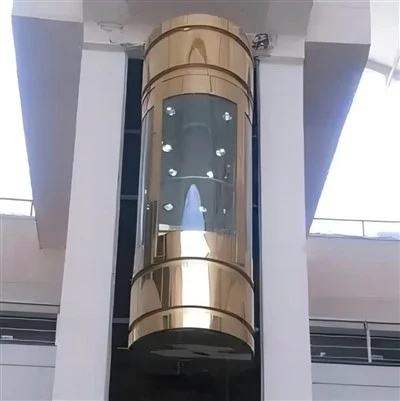
In the realm of vertical transportation, two innovative technologies have been making waves: Vacuum Passenger Lifts and Pneumatic Lifts. As a provider of Vacuum Passenger Lifts, I'm excited to delve into the differences between these two systems, highlighting the unique features and advantages of our Vacuum Passenger Lifts.
Operating Principle
The fundamental difference between Vacuum Passenger Lifts and Pneumatic Lifts lies in their operating principles. Pneumatic Lifts rely on air pressure differentials to move the elevator car. By creating a low - pressure area above the car and a high - pressure area below it, the car is propelled upwards. Conversely, when the pressure is reversed, the car descends. This system typically uses a series of valves and air pumps to control the air pressure.
On the other hand, Vacuum Passenger Lifts operate on the principle of vacuum technology. They create a vacuum above the elevator car, allowing atmospheric pressure to push the car upwards. To descend, the vacuum is gradually released, and the car moves downwards under the influence of gravity and controlled air intake. This technology offers a more direct and efficient way of vertical movement.
Structural Design
Pneumatic Lifts often have a relatively simple and compact design. They usually consist of a cylindrical shaft and a car that fits snugly inside. The lack of a traditional hoistway and counterweights makes them easier to install in existing buildings, especially in spaces with limited room. However, this simplicity can also limit their capacity and speed.
Vacuum Passenger Lifts, in contrast, are designed with a focus on both functionality and aesthetics. Our Vacuum Passenger Lifts feature a sleek and modern design that can complement any building's interior. The shaft is constructed using high - strength materials to ensure safety and durability. Moreover, the absence of a machine room and counterweights allows for more flexible installation options. Whether it's a Commercial Passenger Elevators in a bustling office building or a Luxury Villa Elevator Series in a high - end residence, our Vacuum Passenger Lifts can be customized to meet various architectural requirements.
Capacity and Speed
Pneumatic Lifts generally have a lower capacity compared to Vacuum Passenger Lifts. Due to their design limitations, they are typically suitable for light - duty applications, such as small residential buildings or private homes. The speed of pneumatic lifts is also relatively slow, usually ranging from 0.1 to 0.3 meters per second.
Our Vacuum Passenger Lifts, however, offer a much higher capacity. They can accommodate multiple passengers comfortably, making them ideal for commercial and high - rise buildings. In terms of speed, Vacuum Passenger Lifts can reach speeds of up to 1 meter per second or more, depending on the specific model and configuration. This makes them a more efficient choice for buildings with high traffic flow, such as High - rise Passenger Elevators in skyscrapers.
Safety Features
Both Pneumatic Lifts and Vacuum Passenger Lifts are equipped with safety features to ensure the well - being of passengers. Pneumatic Lifts typically have emergency stop buttons, door interlocks, and over - speed governors. However, their safety mechanisms are somewhat limited by their design and operating principle.
Our Vacuum Passenger Lifts come with a comprehensive set of safety features. In addition to the standard emergency stop buttons and door interlocks, they are equipped with advanced vacuum sensors that continuously monitor the pressure inside the shaft. If there is any abnormal pressure change, the lift will automatically stop and activate the emergency braking system. Moreover, the high - strength shaft structure provides an extra layer of protection against external impacts.
Energy Efficiency
Energy efficiency is an important consideration in today's building design. Pneumatic Lifts consume energy mainly in the form of air compression and ventilation. The continuous operation of air pumps can result in relatively high energy consumption, especially in larger systems.
Vacuum Passenger Lifts, on the other hand, are highly energy - efficient. The use of vacuum technology reduces the need for continuous energy input. When the lift is ascending, the atmospheric pressure does most of the work, while descending is mainly controlled by gravity. This results in significant energy savings over the long term, making our Vacuum Passenger Lifts an environmentally friendly choice.
Maintenance and Service
Pneumatic Lifts require regular maintenance of their air pumps, valves, and seals. These components are subject to wear and tear over time, and any malfunction can affect the lift's performance. Maintenance can be relatively complex and costly, especially if specialized parts need to be replaced.
Our Vacuum Passenger Lifts are designed for easy maintenance. The simple and robust design of the system reduces the number of moving parts, minimizing the risk of breakdowns. Our team of experienced technicians can provide regular maintenance services to ensure the smooth operation of the lifts. We also offer comprehensive after - sales support, including remote monitoring and quick response to any maintenance issues.


Cost Considerations
The initial cost of a Pneumatic Lift is often lower compared to a Vacuum Passenger Lift. This is mainly due to its simpler design and lower manufacturing cost. However, when considering the long - term cost, including energy consumption, maintenance, and capacity, Vacuum Passenger Lifts can offer better value for money.
Our Vacuum Passenger Lifts are priced competitively, taking into account their high - end features, energy efficiency, and long - term reliability. We believe that investing in a high - quality Vacuum Passenger Lift is a wise decision for building owners who value safety, efficiency, and aesthetics.
Conclusion
In conclusion, while both Vacuum Passenger Lifts and Pneumatic Lifts offer innovative solutions for vertical transportation, there are significant differences between the two. Our Vacuum Passenger Lifts stand out in terms of capacity, speed, safety, energy efficiency, and design. Whether you are looking for a lift for a commercial building, a luxury villa, or a high - rise apartment, our Vacuum Passenger Lifts can meet your needs.
If you are interested in learning more about our Vacuum Passenger Lifts or would like to discuss a potential project, we encourage you to reach out to us. Our team of experts is ready to provide you with detailed information and guide you through the procurement process. Let's work together to find the perfect vertical transportation solution for your building.
References
- Elevator Industry Handbook, various editions
- Journal of Vertical Transportation Technology, multiple issues
- Research papers on vacuum and pneumatic elevator technologies from leading engineering institutions