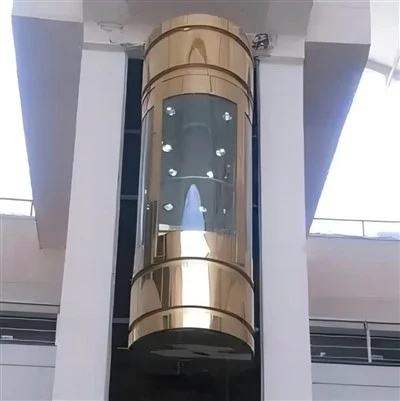
As a leading panoramic elevator supplier, I often encounter questions from clients regarding the power consumption of panoramic elevators. Understanding the power consumption is crucial not only for cost - efficiency but also for environmental considerations. In this blog, I will delve into the factors that influence the power consumption of panoramic elevators and provide some insights to help you make informed decisions.
1. Components and Their Energy Usage
Panoramic elevators, like all elevators, consist of several key components, each with its own power requirements.
Motor
The motor is the heart of the elevator system, responsible for moving the cabin up and down. The power of the motor depends on the elevator's load capacity, speed, and the height it needs to travel. For instance, a high - speed panoramic elevator in a tall building will require a more powerful motor compared to a slow - moving elevator in a low - rise structure. A typical motor for a small - to - medium - sized panoramic elevator might range from 5 to 20 kilowatts (kW). When the elevator is in operation, the motor consumes a significant amount of power, especially during acceleration and deceleration phases.
Control System
The control system manages the elevator's operation, including door opening and closing, floor selection, and safety features. Although the power consumption of the control system is relatively low compared to the motor, it runs continuously as long as the elevator is in standby mode. On average, the control system might consume around 0.5 to 2 kW, depending on its complexity.
Lighting and Ventilation
Panoramic elevators are designed to provide a comfortable and visually appealing experience for passengers. Therefore, they are equipped with lighting fixtures and ventilation systems. The lighting can range from simple LED lights to more elaborate decorative lighting setups. LED lights are energy - efficient, and a well - designed lighting system for a panoramic elevator might consume 0.1 to 0.5 kW. Ventilation systems, which are essential for maintaining air quality inside the cabin, can consume around 0.2 to 1 kW, depending on the size of the cabin and the airflow requirements.
2. Operational Factors Affecting Power Consumption
Traffic Patterns
The frequency of elevator use has a significant impact on power consumption. In a building with high traffic, such as a shopping mall or a busy office building, the elevator will be in operation more frequently, resulting in higher power consumption. On the other hand, in a low - traffic building, such as a small residential complex, the elevator will consume less power as it spends more time in standby mode.
Load Capacity
The weight of the passengers or goods inside the elevator also affects power consumption. A fully loaded elevator requires more energy to move compared to an empty one. Modern elevators are equipped with load sensors that adjust the motor's power output based on the load, but even with this technology, a heavier load will still lead to increased power consumption.
Speed
The speed of the elevator is another important factor. High - speed elevators consume more power, especially during acceleration and deceleration. However, they can also reduce the overall waiting time for passengers, which might be more important in some applications. For example, in a tall skyscraper, a high - speed panoramic elevator can transport passengers quickly between floors, but it will consume more energy compared to a slower elevator.
3. Energy - Saving Technologies
As an elevator supplier, we are committed to providing energy - efficient solutions. Here are some of the technologies we incorporate into our panoramic elevators to reduce power consumption:
Regenerative Drives
Regenerative drives are a significant advancement in elevator technology. When the elevator descends, the regenerative drive converts the potential energy of the descending cabin into electrical energy, which can then be fed back into the building's electrical system. This technology can reduce the elevator's overall power consumption by up to 30%.
LED Lighting
As mentioned earlier, LED lights are highly energy - efficient compared to traditional incandescent or fluorescent lights. By using LED lighting in our panoramic elevators, we can significantly reduce the power consumption of the lighting system.
Intelligent Control Systems
Our intelligent control systems are designed to optimize the elevator's operation based on traffic patterns and load. For example, the system can group passengers going to the same or nearby floors to reduce the number of stops, thereby saving energy.
4. Power Consumption Comparison of Different Types of Panoramic Elevators
We offer a variety of panoramic elevators to meet different customer needs. Let's take a look at the power consumption of some of our popular models:
Small Capsule Lift
This type of elevator is suitable for small buildings or private residences. With a relatively small load capacity and slow speed, its power consumption is relatively low. The motor might consume around 5 - 8 kW, and the total power consumption of the elevator, including the control system, lighting, and ventilation, is approximately 6 - 10 kW.
Capsule Lift for 2 Person
Designed for light - traffic applications, the power consumption of this elevator is also relatively modest. The motor power is around 7 - 10 kW, and the total power consumption is about 8 - 12 kW.
Glass Panoramic Elevator
This type of elevator is often used in commercial buildings or high - end residential complexes. It usually has a larger load capacity and higher speed, resulting in higher power consumption. The motor might consume 15 - 20 kW, and the total power consumption can reach 18 - 25 kW.
5. Calculating the Cost of Power Consumption
To calculate the cost of power consumption for a panoramic elevator, you need to know the elevator's power rating (in kW), the number of hours it operates per day, and the cost of electricity per kilowatt - hour (kWh).
For example, if a panoramic elevator has a power rating of 10 kW and operates for 10 hours per day, and the cost of electricity is $0.15 per kWh, the daily cost of power consumption is 10 kW × 10 hours × $0.15/kWh = $15. The monthly cost would be $15 × 30 = $450.
It's important to note that these are just rough estimates, and the actual power consumption and cost may vary depending on the factors mentioned above.
6. Contact Us for More Information
If you are considering purchasing a panoramic elevator and want to know more about power consumption, or if you have any other questions regarding our products, we are here to help. Our team of experts can provide you with detailed information and help you choose the most suitable elevator for your needs. We can also assist you in calculating the power consumption and cost based on your specific requirements.
Making an informed decision about panoramic elevator power consumption is essential for both your budget and the environment. By choosing an energy - efficient elevator and understanding its power requirements, you can enjoy the benefits of a panoramic elevator while minimizing your energy costs.


References
- ASME A17.1 - Safety Code for Elevators and Escalators
- ISO 25745 - Lift installation - Electrical equipment
- Otis Elevator Company. Elevator Energy Efficiency Guide.