


Elevator investment decisions in 2026 require more than comparing an equipment quotation with a modernization proposal. Building owners, property developers, facility managers, and investors must evaluate capital expenditure, energy consumption, equipment reliability, construction disruption, maintenance obligations, and the expected remaining service life of the building. An elevator retrofit may preserve useful infrastructure and reduce the initial investment, while a new installation can offer greater flexibility when the existing system no longer meets operational requirements.
The right choice depends on the building's current condition, expected traffic, future use, available space, and financial objectives. A low initial quotation does not automatically represent the lowest lifecycle cost, just as purchasing an entirely new system does not guarantee the fastest return. This guide explains how to compare elevator retrofit and new installation projects in 2026, estimate potential energy savings, calculate payback, and prepare a more reliable capital investment plan.
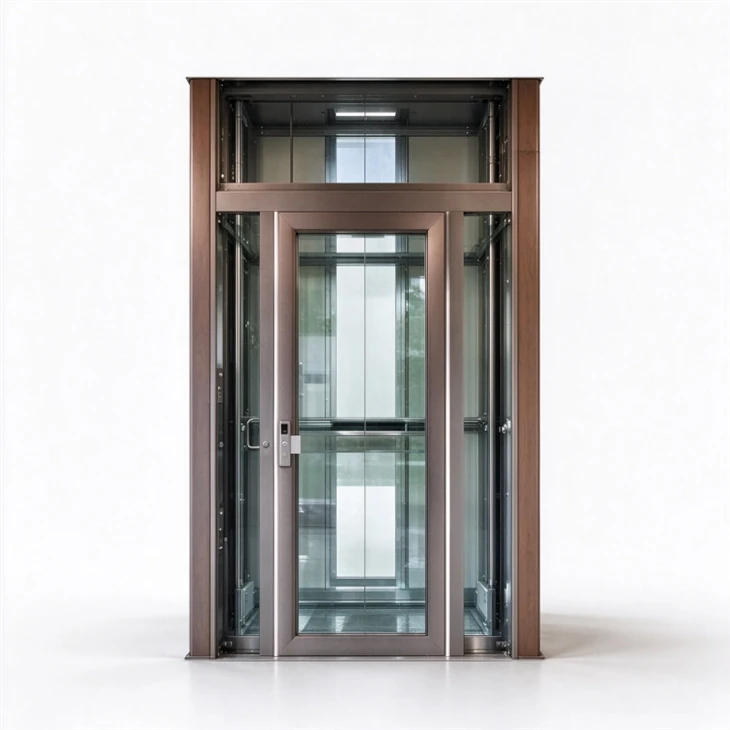
For projects involving new construction, building extensions, or a redesigned vertical transportation system, the MRL Panoramic Elevator can be considered as part of a broader architectural and equipment planning discussion. Its suitability should be assessed against the building layout, passenger demand, applicable codes, and the intended visual design rather than assumed to be a direct replacement for every existing elevator.
Elevator Retrofit vs. New Installation: Understanding the Difference
An elevator retrofit, often described as modernization, upgrades some or most of an existing elevator's systems while retaining suitable parts of the current installation. Depending on the equipment condition and project objectives, the work may include a new controller, drive, door operator, operating panels, signal fixtures, cab finishes, wiring, or selected mechanical components. More extensive projects may replace the traction machine or hydraulic equipment and upgrade safety-related systems.
A new installation generally involves supplying and installing a new elevator system. In a new building, the elevator is integrated into the architectural and structural design from the beginning. In an existing building, replacement may require the removal of old equipment, adaptations to the shaft, changes to electrical services, and coordination with other building trades. The actual scope depends on whether the project reuses the existing hoistway and supporting infrastructure or creates a substantially different arrangement.
Elevator Retrofit
- Retains suitable existing infrastructure.
- Can target specific performance or reliability problems.
- May reduce demolition and structural work.
- Requires a detailed assessment of compatibility and remaining component life.
- Can be phased in some buildings, subject to safety and operational constraints.
New Installation
- Provides greater freedom to configure a complete system.
- Can address capacity, speed, layout, and appearance requirements together.
- May reduce dependence on obsolete components.
- Can involve higher initial capital and more extensive site work.
- Requires coordination of equipment, building design, installation, and acceptance testing.
Neither option is universally superior. If the existing shaft, guide rails, doors, and major structural elements remain suitable, a carefully scoped retrofit may offer strong financial value. If the elevator repeatedly fails, essential parts are no longer available, passenger demand has changed significantly, or the building needs a different capacity or configuration, a larger replacement project may be more practical.
The first decision should therefore be based on a documented condition assessment rather than the age of the elevator alone. Equipment age is a useful warning indicator, but actual condition, service history, spare-part availability, traffic demand, and the cost of maintaining existing components provide a more complete basis for investment.
Capital Cost in 2026: Compare the Complete Project Scope
Capital cost is often the first figure reviewed during budget planning, but quotations are only comparable when they cover equivalent work. A retrofit proposal may include only the controller and selected electrical components, while a replacement proposal may include a new machine, door system, cab, fixtures, installation labor, and testing. Comparing the totals without reconciling these differences can lead to a misleading investment decision.
A complete budget should separate the equipment package from the work needed to make that equipment operational within the building. It should also identify exclusions, allowances, contingency provisions, and responsibilities for permits, inspections, and coordination with other contractors.
| Cost Category | Retrofit Considerations | New Installation Considerations |
|---|---|---|
| Equipment | Depends on which components are retained or replaced. | Includes the specified new elevator system and associated equipment. |
| Building work | May involve shaft adjustments, wiring changes, access improvements, or repairs to existing structures. | May include new shaft construction, pit work, overhead clearance, and structural coordination. |
| Electrical and controls | Compatibility with retained systems must be confirmed. | Power supply, controls, communications, and interfaces are designed around the new system. |
| Labor and installation | Removal, adaptation, restricted access, and work in occupied buildings can affect labor. | Installation access, lifting requirements, sequencing, and other trades affect labor. |
| Compliance and testing | Alterations may trigger specific code upgrades and acceptance requirements. | The installation must meet applicable requirements for the project and jurisdiction. |
| Downtime and contingency | Service interruption and hidden defects can increase the overall project cost. | Construction duration, access restrictions, and interface risks must be budgeted. |
A low retrofit quote may exclude a worn door operator, deteriorated wiring, or safety-related upgrades identified after work begins. Conversely, a replacement proposal may include building work that is unnecessary if the existing shaft and structural components are suitable. Both situations can distort the initial comparison.
To reduce uncertainty, ask each bidder to provide a clear equipment schedule, a list of retained components, the assumed condition of existing infrastructure, the included code-related work, and a schedule of exclusions. Where the existing installation has not been fully inspected, request that unknown conditions and their potential financial impact be identified before the contract is finalized.
Owners should also consider the time value of money. A larger project completed today may reduce future repair exposure, but the extra capital has an opportunity cost. A retrofit may preserve funds for other building improvements, yet it could require another major investment sooner if important retained components approach the end of their useful life.
Energy Savings: Where Efficiency Improvements Come From
Energy performance should be measured using the actual operating pattern of the elevator rather than a general claim about modern equipment. Electricity consumption depends on the drive system, motor and control technology, load profile, travel distance, number of starts, standby functions, door operation, lighting, ventilation, and passenger demand. A lightly used elevator in a small residential building may have a very different energy profile from a heavily used elevator in a hotel or office complex.
Modernization can reduce energy use when it replaces inefficient components with appropriately selected technology. Potential improvement areas include motor control, drive efficiency, standby power management, lighting, and the way the system handles traffic. However, savings depend on what is being replaced and how the new equipment is configured. Replacing a recently upgraded controller may produce a different result from replacing an older system with inefficient drive equipment and continuously energized auxiliary components.
Drive and Motor
Review motor efficiency, drive control, starting behavior, and energy use during actual trips.
Standby Functions
Assess whether lighting, displays, fans, and other auxiliary systems can use suitable low-power modes.
Traffic and Control
Evaluate dispatching, unnecessary trips, passenger demand, and the impact of the operating schedule.
Before estimating savings, collect electricity data for the existing elevator. Where practical, use a dedicated meter or a suitable measurement method that separates elevator consumption from other building loads. Record the measurement period, number of operating days, service hours, passenger activity if available, and unusual operating conditions. A short measurement during a quiet period may not represent the annual energy profile.
Next, request energy information for the proposed equipment under comparable assumptions. Ask how standby consumption is measured, which auxiliary components are included, and whether the figures represent typical operation or a defined test condition. Comparing figures from different test methods can create a false impression of the expected benefit.
For an existing elevator, a retrofit may be financially attractive when energy improvements can be achieved without replacing structurally sound components. A new installation may provide a better opportunity to integrate energy-conscious design from the beginning, particularly when the building is undergoing a major redevelopment. Nevertheless, a new system should not be selected on the basis of efficiency claims alone. Its capacity, service requirements, operating reliability, and compatibility with the building must also be evaluated.
Energy reduction is only one part of the operating-cost calculation. Maintenance calls, replacement parts, service availability, and the financial impact of an outage can be equally important. An investment that delivers moderate electricity savings but significantly improves reliability may still be attractive, provided the value of those reliability improvements is documented separately from energy savings.
How to Calculate Payback and Compare Long-Term Value
Simple payback estimates how long it takes for annual financial benefits to recover the initial investment. It is useful for screening proposals, but it does not account fully for the time value of money, changes in energy prices, future maintenance costs, or the remaining service life of the equipment. For major capital decisions, simple payback should be used alongside a lifecycle cost analysis.
Simple Payback Formula
Simple Payback Period = Net Initial Investment ÷ Annual Net Financial Benefit
Annual net financial benefit should reflect verified energy savings and other measurable annual savings, less any additional recurring costs associated with the proposed system. Avoid counting the same benefit twice.
Consider a hypothetical example. A building owner is evaluating a retrofit with a net initial investment of $80,000. The assessment estimates annual electricity savings of $8,000 and additional annual maintenance savings of $4,000. If there are no additional recurring costs in this simplified example, the annual net financial benefit is $12,000, resulting in a simple payback of approximately 6.7 years.
This example is illustrative only. It is not a price estimate or a forecast for any specific elevator. Actual costs and savings depend on the existing equipment, scope of work, electricity tariff, maintenance agreement, usage, installation conditions, and local requirements.
| Illustrative Annual Benefit | Amount |
|---|---|
| Estimated electricity savings | $8,000 |
| Estimated maintenance savings | $4,000 |
| Total annual net benefit | $12,000 |
| Illustrative initial investment | $80,000 |
| Simple payback | 6.7 years |
A stronger comparison should consider the expected life of each alternative, scheduled maintenance, major component replacements, electricity consumption, service interruptions, financing costs, and the residual value of the equipment at the end of the evaluation period. If the retrofit retains components that may need replacement in a few years, their expected future costs should be included rather than ignored.
Net present value (NPV) can help compare alternatives with different investment levels and different patterns of future expenditure. It discounts future costs and benefits to today's value using a selected discount rate. A positive NPV indicates that the projected benefits exceed the costs under the assumptions used, while a higher NPV can indicate a more financially attractive option when the alternatives are assessed on a consistent basis.
Owners should also run sensitivity scenarios. Test what happens if electricity prices remain flat, energy savings are lower than expected, maintenance costs rise, or the installation is delayed. If the investment only appears attractive under optimistic assumptions, additional engineering review or a revised scope may be warranted.
Downtime, Construction Risk, and Building Operations
The financial impact of elevator work extends beyond the equipment invoice. During a retrofit, the elevator being modernized may be unavailable for part or all of the installation period. In a building with several elevators, the work may be sequenced to retain some passenger service. In a single-elevator residential building, hotel, or small commercial property, even a temporary shutdown can create significant access and operational challenges.
A new installation in an existing building may involve more extensive removal, building modifications, and coordination between contractors. A new-build project can be easier to coordinate when the shaft, power supply, access routes, and installation sequence are included in the original construction program. However, design changes, delayed site readiness, and incomplete interfaces can still affect the schedule.
Measure the Cost of an Outage
Estimate the cost of downtime using factors relevant to the building. For a hotel, this may include guest access, staff workload, and service disruption. In an office property, it may include tenant complaints, accessibility arrangements, and the effect on building operations. For a residential property, the consequences may include inconvenience for residents with mobility limitations and the need for temporary access support.
These costs should be assessed realistically. Not every inconvenience can be converted into a precise financial figure, but important operational risks should not disappear from the decision simply because they are difficult to quantify. A project schedule should identify expected shutdown periods, inspection milestones, equipment delivery dates, and the process for communicating with occupants.
Reduce the Risk of Unexpected Work
- Arrange a site survey before finalizing the equipment and installation quotation.
- Document the condition of the shaft, pit, overhead space, guide rails, doors, and electrical infrastructure.
- Identify code-related upgrades and inspection requirements applicable to the building and jurisdiction.
- Confirm equipment lead times, site access, lifting arrangements, and responsibilities between the elevator contractor and other trades.
- Include contingency allowances for clearly identified unknown conditions rather than relying on an unqualified fixed-price assumption.
These steps help make the financial comparison more credible. A retrofit can lose its cost advantage if substantial hidden defects are discovered after work starts. A new installation can also exceed its budget when the existing building requires structural or electrical changes that were not included in the original proposal.
How to Choose the Right Investment Strategy
The most suitable strategy should align the elevator's physical condition with the owner's operational and financial objectives. Rather than beginning with the question of which option costs less, begin by defining what the building needs to achieve over the next 10 to 20 years, or another period appropriate to the asset plan.
Assess Existing Equipment
Review breakdown history, maintenance records, component obsolescence, passenger complaints, current energy use, and the condition of retained infrastructure.
Define Future Building Demand
Determine expected occupancy, traffic patterns, accessibility needs, passenger capacity, travel distance, and whether the building's use will change.
Develop Comparable Proposals
Request a clearly defined retrofit option and a replacement option where both are technically feasible. Make sure each quotation lists included work, exclusions, schedule, and warranty terms.
Compare Lifecycle Economics
Calculate initial investment, annual energy and maintenance costs, outage exposure, expected component replacements, and discounted lifecycle cost.
Confirm Implementation Feasibility
Validate shaft dimensions, structural requirements, installation access, electrical capacity, inspection obligations, delivery schedules, and long-term service support.
A retrofit is often worth examining first when the existing structure remains suitable, the building's traffic requirements are stable, and the main problems can be resolved by replacing specific systems. A new installation deserves stronger consideration when the required capacity or layout cannot be achieved economically with the existing equipment, when multiple major systems are at the end of their useful life, or when redevelopment creates an opportunity to redesign the entire vertical transportation system.
Some projects fall between these categories. A major modernization can replace nearly all operating equipment while retaining the shaft and certain building elements. This option should be evaluated separately from a limited retrofit and a fully new installation, with a clearly documented scope for each alternative.
Planning a New Elevator Installation for Architectural Projects
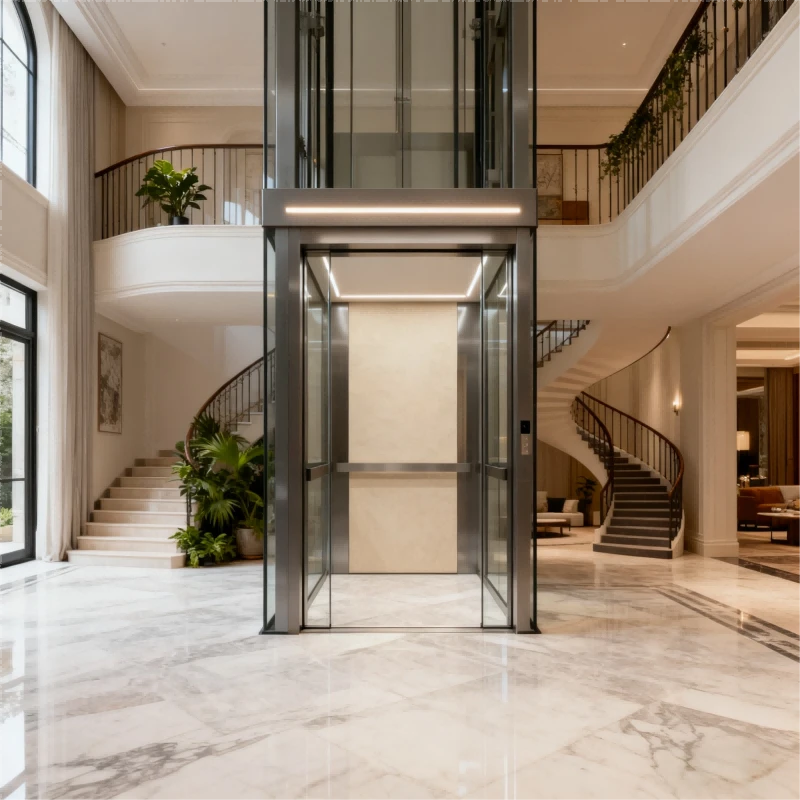
When a project calls for a new elevator, equipment selection should start with the building's functional requirements. Passenger demand, travel height, number of stops, rated capacity, speed, door configuration, available shaft dimensions, and local regulatory requirements all affect the design. Architectural appearance is important as well, particularly in hotels, commercial developments, residential buildings, and properties where the elevator is part of the visitor experience.
MRL Panoramic Elevator concepts can be relevant when visibility, natural light, and integration with the surrounding architecture are priorities. A machine-room-less arrangement may also be worth assessing where the building layout makes a separate machine room undesirable or impractical. However, the actual space requirements, machine access, maintenance provisions, structural loads, and installation conditions must be confirmed for the selected configuration.
The MRL Panoramic Elevator is a product option to review during early-stage planning when a project combines panoramic design preferences with a machine-room-less concept. Final selection should follow technical review of the drawings, shaft dimensions, rated load, travel, entrances, and applicable safety requirements. Product selection should never substitute for site-specific engineering and compliance verification.
For a retrofit project, the same planning discipline is necessary even when the building already has an elevator shaft. Existing drawings may not reflect current site conditions, and dimensions or structural details should be checked before equipment is finalized. Early drawing review can help identify potential conflicts, reduce avoidable revisions, and clarify the division of responsibilities between the equipment supplier, architect, contractor, and building owner.
-
What are the verified shaft width, shaft depth, pit depth, and overhead clearance?
- How many stops are required, and what are the expected passenger capacity and traffic patterns?
- Which entrance arrangements, cab finishes, and visual features are necessary for the project?
- What power supply, control interfaces, and building coordination work will be required?
- How will installation access, maintenance access, testing, and final acceptance be managed?
These questions help ensure that equipment decisions reflect actual project conditions. They also make it easier to compare suppliers on equivalent requirements instead of comparing proposals that differ in capacity, finishes, scope, or installation responsibilities.
Equipment Planning and Manufacturer Cooperation
Successful elevator investment depends on coordination between the owner, design team, equipment manufacturer, installer, and maintenance provider. For a retrofit, the first priority is to understand what can safely and economically remain in service. For a new installation, the priority is to match the equipment configuration to the building's design, expected demand, and long-term operating requirements.
VOLK's company introduction page provides a starting point for learning about the company and its elevator offering. When evaluating a potential supplier, buyers should review the information available about its products, technical coordination, manufacturing capabilities, and project support, then confirm the specific services and responsibilities that will apply to their order.
During the inquiry and quotation stage, building owners and project teams should prepare drawings, dimensions, travel height, number of stops, required capacity, entrance arrangement, preferred finishes, and installation conditions. Where the project involves an existing building, available information about the current elevator and the condition of the shaft should also be shared. This allows the technical team to assess whether the proposed equipment is appropriate and whether additional information or site verification is required.
Before placing an order, the buyer should confirm the final technical schedule, the approved drawings, equipment scope, delivery expectations, installation interfaces, warranty terms, and the documents required for inspection and handover. Clear written confirmation is especially important when a project involves customized dimensions or finishes, limited access, a constrained construction schedule, or multiple contractors working in the same area.
For capital planning, supplier discussions should also cover maintainability and the availability of service support over the expected ownership period. The owner should understand which components are included, what routine maintenance is expected, how service calls will be handled, and which records should be retained for future modernization decisions. A technically suitable elevator is a long-term asset, so the purchase decision should consider its full operating context rather than the installation price alone.
To discuss a project, buyers can contact VOLK through its website and provide the basic building and equipment requirements for an initial review. Final configuration, pricing, delivery, and compliance details should be confirmed for the specific project rather than inferred from general product information.
FAQ
No. A retrofit often avoids some equipment and structural costs by retaining suitable existing infrastructure, but the result depends on the work required. Extensive mechanical replacement, hidden defects, obsolete components, and code-related upgrades can increase the total. A new installation can be more economical over the long term if the existing system requires multiple major repairs or cannot meet future requirements.
There is no universal savings percentage that applies to every elevator. The result depends on the existing drive technology, operating schedule, passenger demand, standby power, and the equipment selected. Owners should establish a baseline from actual consumption and compare it with documented estimates for the proposed system under similar operating assumptions.
A reasonable payback period depends on the project cost and verified annual benefits. Calculate the initial net investment divided by annual net financial benefit for a simple estimate, then assess lifecycle cost and discounted cash flow for a more complete decision. Reliability improvements and avoided downtime may be relevant, but their value should be supported by a transparent calculation.
Replacement deserves serious consideration when essential components are obsolete, major systems require simultaneous replacement, the elevator no longer meets the building's capacity or layout requirements, or the existing infrastructure is unsuitable for continued use. A qualified condition assessment and comparable project proposals are the best starting points.
Energy is one important factor, but it should be considered alongside safety, reliability, accessibility, maintenance costs, passenger experience, and future building demand. A replacement may be justified even when energy savings alone do not deliver an attractive payback, provided other benefits and required work support the investment.
Prepare building drawings, shaft and pit dimensions, travel height, number of stops, rated capacity, door requirements, current equipment information, operating issues, preferred finishes, and the intended installation schedule. A site survey and technical review may be needed before the final scope and price can be confirmed.
Conclusion: Make the Decision Based on Lifecycle Value
In 2026, elevator retrofit and new installation decisions should be based on the condition of existing equipment, the building's future requirements, the total capital cost, and the long-term cost of ownership. A retrofit can preserve useful infrastructure and focus investment on the components that most affect performance. A new installation can offer greater design flexibility and a more comprehensive response when the existing system no longer meets operational or architectural needs.
Before making a commitment, compare equivalent scopes, verify energy assumptions, account for maintenance and downtime, and test the financial case under different scenarios. Payback is a useful screening measure, but it should not replace a broader review of lifecycle cost, service reliability, and project feasibility.
For projects considering panoramic elevator design and a machine-room-less configuration, the MRL Panoramic Elevator can be reviewed against the project's architectural drawings and technical requirements. Early communication with the equipment supplier helps clarify configuration options, identify design constraints, and establish a more reliable basis for budgeting and order confirmation.


