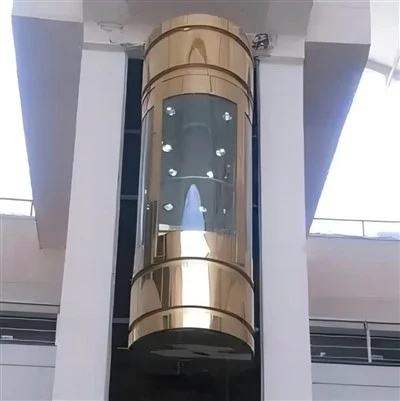
As a supplier of passenger elevators, I often encounter inquiries from clients in regions with cold climates about the suitability of our elevators for such environments. This blog post aims to delve into the technical aspects and considerations regarding the use of passenger elevators in cold conditions.
Technical Challenges in Cold Environments
Lubrication Issues
In cold environments, the viscosity of lubricants used in elevator systems increases significantly. Lubricants are crucial for the smooth operation of moving parts such as the elevator's hoist ropes, guide rails, and door mechanisms. When the temperature drops, the lubricant thickens, which can lead to increased friction and wear on these components. For example, the hoist ropes may experience uneven wear, affecting their lifespan and potentially compromising the safety of the elevator. To address this issue, special low - temperature lubricants are required. These lubricants are formulated to maintain their fluidity at lower temperatures, ensuring proper lubrication and reducing friction.
Electrical Component Performance
Cold temperatures can have a detrimental effect on the performance of electrical components in passenger elevators. Batteries, for instance, lose their capacity and charge - holding ability in cold conditions. The control panels and motor drives of the elevator also need to operate within a specific temperature range. If the temperature drops too low, the electrical conductivity of the wires may decrease, leading to signal interference and potential malfunctions. To mitigate these problems, elevator systems can be equipped with heating elements to keep the electrical components within their optimal operating temperature range.
Structural Integrity
The structural materials of the elevator car and the shaft can be affected by cold temperatures. Metals contract in the cold, which can cause stress on the joints and connections of the elevator structure. Over time, this stress can lead to cracks and loosening of components, posing a safety risk. Additionally, ice and snow accumulation on the elevator doors and landing sills can prevent proper door operation, leading to entrapment or other safety hazards. Regular inspections and maintenance are essential to ensure the structural integrity of the elevator in cold environments.
Our Solutions for Cold Environments
Specialized Lubrication Systems
We offer passenger elevators equipped with specialized lubrication systems designed for cold - weather operation. These systems use low - temperature lubricants that are carefully selected to maintain their performance even in sub - zero temperatures. The lubrication is applied in a controlled manner to ensure that all critical components are properly lubricated, reducing friction and wear.
Temperature - Controlled Electrical Enclosures
To protect the electrical components of our elevators, we install temperature - controlled enclosures. These enclosures are equipped with heating elements that automatically activate when the temperature drops below a certain threshold. This ensures that the electrical components, such as the control panels and motor drives, remain within their optimal operating temperature range, preventing malfunctions and extending their lifespan.
Cold - Resistant Structural Materials
Our elevators are constructed using cold - resistant structural materials. These materials are designed to withstand the contraction and expansion caused by temperature changes without compromising the structural integrity of the elevator. We also provide additional insulation for the elevator car and shaft to reduce the impact of cold temperatures on the internal components.


Ice and Snow Protection
To prevent ice and snow accumulation on the elevator doors and landing sills, we offer optional ice - melting systems. These systems use heating elements to keep the surfaces above the freezing point, ensuring smooth door operation and preventing safety hazards.
Types of Passenger Elevators Suitable for Cold Environments
High - rise Passenger Elevators
Our High - rise Passenger Elevators are designed to meet the demands of tall buildings in cold regions. They are equipped with advanced technology and robust components to ensure reliable operation in harsh weather conditions. The high - rise elevators feature high - speed hoist systems and efficient control panels that are protected by our temperature - control solutions.
Small Machine Room Passenger Elevator
The Small Machine Room Passenger Elevator is an ideal choice for buildings with limited space. Despite its compact design, it is fully capable of operating in cold environments. The machine room is equipped with insulation and heating systems to protect the critical components from the cold.
Automatic Passenger Elevator
Our Automatic Passenger Elevator offers convenience and efficiency in cold - weather operation. It features advanced automation technology that ensures smooth and reliable performance. The elevator's control system is designed to adapt to the changing environmental conditions, providing a safe and comfortable ride for passengers.
Case Studies
Arctic Research Station
We installed a high - rise passenger elevator at an arctic research station. The elevator was exposed to extremely cold temperatures, often dropping below - 30°C. Thanks to our specialized cold - weather solutions, the elevator has been operating reliably for several years. The low - temperature lubrication system and the heating elements in the electrical enclosures have ensured that the elevator functions smoothly, even in the harshest winter conditions.
Ski Resort Hotel
A ski resort hotel in a mountainous region with cold winters installed our small machine room passenger elevator. The elevator is located in an open - air shaft, which is exposed to snow and ice. Our ice - melting system on the doors and landing sills has prevented ice accumulation, ensuring that the elevator doors open and close properly. The temperature - controlled electrical enclosure has also protected the control panels from the cold, resulting in minimal downtime and high - level passenger satisfaction.
Conclusion
In conclusion, while there are significant technical challenges associated with using passenger elevators in cold environments, with the right solutions and technologies, it is entirely possible to operate elevators safely and reliably in such conditions. At our company, we are committed to providing high - quality passenger elevators that are specifically designed to meet the demands of cold - weather operation.
If you are considering purchasing a passenger elevator for a cold - climate location, we invite you to contact us for a detailed consultation. Our team of experts will be happy to discuss your specific requirements and provide you with the best elevator solutions.
References
- ASME A17.1 Safety Code for Elevators and Escalators, American Society of Mechanical Engineers.
- ISO 22559 - 1:2019 Lift structures — Part 1: General requirements, International Organization for Standardization.
- Elevator Maintenance Handbook, Elevator World Publications.