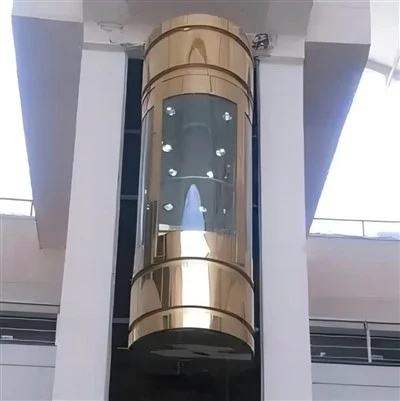
As a supplier of Vacuum Passenger Lifts, I often encounter inquiries from commercial building owners and developers about the feasibility of installing our innovative lifts in their properties. In this blog post, I will delve into the technical, economic, and practical aspects of installing a vacuum passenger lift in a commercial building, providing you with a comprehensive understanding of the possibilities and challenges.
Technical Feasibility
How Vacuum Passenger Lifts Work
Vacuum passenger lifts operate on a revolutionary principle that differs significantly from traditional cable - driven or hydraulic lifts. They use air pressure differentials to move the lift car. A vacuum is created above the car, and the air pressure below the car pushes it upwards. To descend, the air is gradually released into the vacuum chamber above the car, allowing it to move downwards in a controlled manner.
This technology offers several technical advantages for commercial buildings. Firstly, it requires less space compared to traditional lifts. Since there are no cables or large hydraulic systems, the shaft can be more compact, which is a significant benefit in commercial buildings where space is often at a premium. For example, in a high - rise office building, saving even a few square meters of floor space in the lift shaft area can translate into additional rentable office space.
Structural Compatibility
One of the key considerations in installing a vacuum passenger lift in a commercial building is the structural compatibility. Unlike traditional lifts that require a strong and stable hoistway structure to support the heavy cables and machinery, vacuum lifts exert less stress on the building structure. The lift car is relatively lightweight, and the forces involved in its operation are more evenly distributed. However, the building's foundation and the surrounding structure still need to be evaluated to ensure that they can withstand the installation and operation of the lift.
In most cases, existing commercial buildings can be retrofitted with vacuum passenger lifts, provided that the structural integrity of the building allows for the necessary modifications. For new commercial construction projects, the design can be optimized from the start to accommodate the vacuum lift system, which can simplify the installation process and potentially reduce costs.
Economic Considerations
Installation Costs
The installation cost of a vacuum passenger lift in a commercial building can vary depending on several factors. Compared to traditional high - rise passenger elevators, the initial installation cost of a vacuum lift may be slightly higher in some cases. This is mainly due to the relatively new technology and the specialized components required for the air - pressure - based system. However, it's important to note that the reduced space requirements can offset some of these costs. For instance, if less floor space is used for the lift shaft, the savings in construction costs for that area can be significant.
On the other hand, for smaller commercial buildings or low - rise structures, the cost difference between a vacuum lift and a traditional lift may be less pronounced. In fact, in some cases, the overall installation cost of a vacuum lift can be competitive, especially when considering the long - term benefits.
Operational Costs
Vacuum passenger lifts are generally more energy - efficient than traditional lifts. The air - pressure - based system consumes less electricity during operation, which can result in substantial savings on energy bills over the life of the lift. Additionally, the maintenance requirements for vacuum lifts are often lower. Since there are fewer moving parts compared to cable - driven or hydraulic lifts, there is less wear and tear, reducing the frequency and cost of maintenance and repairs.
For a commercial building owner, lower operational costs can have a positive impact on the bottom line. For example, in a shopping mall, where the lifts are in constant use throughout the day, the energy and maintenance savings from a vacuum lift can contribute to the overall profitability of the business.
Practical Advantages for Commercial Buildings
Flexibility in Design
Vacuum passenger lifts offer greater flexibility in design compared to traditional lifts. They can be installed in a variety of locations within a commercial building, including atrium areas, near large glass facades, or in unconventional spaces. This flexibility allows architects and designers to create more unique and functional building layouts. For example, in a modern hotel, a vacuum lift can be installed in a central atrium, providing guests with a scenic and unique elevator experience.
Safety and Reliability
Safety is of utmost importance in commercial buildings. Vacuum passenger lifts are equipped with multiple safety features, such as emergency braking systems, pressure sensors, and backup power supplies. These features ensure the safety of passengers in the event of an emergency. Moreover, the technology has been thoroughly tested and proven to be reliable in various applications. The simple and robust design of the vacuum lift system reduces the risk of mechanical failures, providing peace of mind for building owners and users.
Challenges and Limitations
Capacity Limitations
One of the main limitations of vacuum passenger lifts is their relatively lower capacity compared to some traditional high - rise passenger elevators. While vacuum lifts are suitable for most low - to mid - rise commercial buildings, they may not be the best choice for very high - density commercial environments, such as large - scale convention centers or extremely tall skyscrapers with a high volume of traffic. In such cases, a combination of vacuum lifts and traditional high - capacity elevators may be considered to meet the demand.
Public Perception
Another challenge is the public perception of new technology. Some building users may be hesitant to use a vacuum passenger lift due to its unfamiliarity. However, as the technology becomes more widespread and the benefits are more widely known, this perception is likely to change. Building owners can play an important role in educating their tenants and visitors about the safety and advantages of vacuum lifts.


Conclusion and Call to Action
In conclusion, a vacuum passenger lift can be a viable option for many commercial buildings. Its technical advantages, economic benefits, and practical features make it an attractive choice for both new construction and retrofit projects. While there are some challenges and limitations, they can be managed through careful planning and consideration.
If you are a commercial building owner, developer, or architect interested in exploring the possibility of installing a vacuum passenger lift in your project, I encourage you to contact us for a detailed consultation. Our team of experts can provide you with more information, conduct a site assessment, and help you determine the best solution for your specific needs. Whether you are looking for a Temporary Passenger Lift for a construction project, High - rise Passenger Elevators for a tall building, or Luxury Villa Elevator Series for a high - end commercial property, we have the expertise and the products to meet your requirements.
References
- "Elevator Technology Handbook", Wiley, 2018.
- "Building Services Engineering for Architects and Surveyors", Taylor & Francis, 2020.
- Industry reports on the latest trends in elevator technology from leading market research firms.