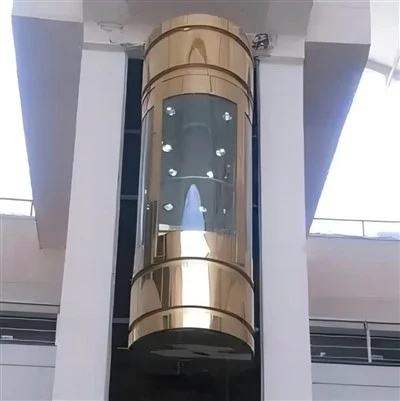
As a supplier of Traction Passenger Lifts, I've witnessed firsthand the growing importance of energy efficiency in the elevator industry. In this blog, I'll delve into how Traction Passenger Lifts optimize energy consumption, exploring the technologies and strategies that make these elevators not only reliable but also environmentally friendly.
Understanding Traction Passenger Lifts
Traction Passenger Lifts are a common type of elevator system used in various buildings, from commercial skyscrapers to residential complexes. These lifts operate on the principle of traction, where a motor drives a sheave (a pulley-like device) that moves the elevator car up and down along guide rails. Unlike hydraulic lifts, which rely on a piston and hydraulic fluid to lift the car, traction lifts offer several advantages, including higher speed, greater energy efficiency, and a smaller footprint.
Energy-Efficient Technologies in Traction Passenger Lifts
Regenerative Drives
One of the most significant advancements in Traction Passenger Lifts is the use of regenerative drives. These drives are designed to capture and reuse the energy generated during the elevator's descent. When the elevator car moves downward, the motor acts as a generator, converting the kinetic energy of the descending car into electrical energy. This energy is then fed back into the building's electrical system, reducing the overall energy consumption of the elevator.
Regenerative drives can significantly reduce energy costs, especially in high-rise buildings where elevators are in constant use. According to a study by the Elevator World, regenerative drives can save up to 30% of the energy consumed by a traditional elevator system.
LED Lighting
Another energy-saving feature in Traction Passenger Lifts is the use of LED lighting. LED lights are more energy-efficient than traditional incandescent or fluorescent lights, consuming up to 80% less energy. In addition to reducing energy consumption, LED lights also have a longer lifespan, reducing maintenance costs.
Many modern Traction Passenger Lifts are equipped with LED lighting systems that are designed to automatically adjust the light intensity based on the time of day and the occupancy of the elevator car. This not only saves energy but also provides a more comfortable and pleasant experience for passengers.
Variable Frequency Drives (VFDs)
Variable Frequency Drives (VFDs) are another important technology used in Traction Passenger Lifts to optimize energy consumption. VFDs allow the elevator motor to operate at variable speeds, depending on the load and the demand. This means that the motor can run at a lower speed when the elevator is lightly loaded, reducing energy consumption.
VFDs also provide a smoother and more efficient operation of the elevator, reducing wear and tear on the motor and other components. This can extend the lifespan of the elevator and reduce maintenance costs.
Strategies for Optimizing Energy Consumption
Intelligent Control Systems
Intelligent control systems are essential for optimizing the energy consumption of Traction Passenger Lifts. These systems use advanced algorithms to analyze the traffic patterns in the building and adjust the elevator operation accordingly. For example, the control system can group passengers going to the same floor together, reducing the number of stops and the overall travel time of the elevator.
Intelligent control systems can also adjust the elevator's speed and acceleration based on the load and the demand. This ensures that the elevator operates at the most efficient speed, reducing energy consumption.
Energy Management Systems
Energy management systems are another important strategy for optimizing the energy consumption of Traction Passenger Lifts. These systems monitor the energy consumption of the elevator and provide real-time data on energy usage. This allows building managers to identify areas where energy can be saved and implement measures to reduce energy consumption.
Energy management systems can also be integrated with the building's overall energy management system, allowing for a more comprehensive approach to energy efficiency. For example, the elevator can be programmed to operate during off-peak hours when electricity rates are lower, reducing energy costs.


Regular Maintenance and Upgrades
Regular maintenance and upgrades are essential for ensuring the energy efficiency of Traction Passenger Lifts. Over time, the components of the elevator can wear out, reducing its efficiency. By performing regular maintenance and upgrades, building managers can ensure that the elevator is operating at its optimal efficiency.
Upgrades can include the installation of new energy-efficient components, such as regenerative drives and LED lighting. These upgrades can not only reduce energy consumption but also improve the performance and reliability of the elevator.
Conclusion
Traction Passenger Lifts offer several advantages in terms of energy efficiency, thanks to the use of advanced technologies and strategies. By implementing regenerative drives, LED lighting, variable frequency drives, intelligent control systems, energy management systems, and regular maintenance and upgrades, building managers can significantly reduce the energy consumption of their elevators.
As a supplier of Traction Passenger Lifts, we are committed to providing our customers with energy-efficient solutions that not only meet their needs but also contribute to a more sustainable future. If you are interested in learning more about our Traction Passenger Lifts or would like to discuss your specific requirements, please feel free to [initiate a procurement discussion]. We look forward to working with you to optimize your elevator system's energy consumption.
References
- Elevator World. (Year). "Energy Efficiency in Elevators."
- [Other relevant industry reports or studies]