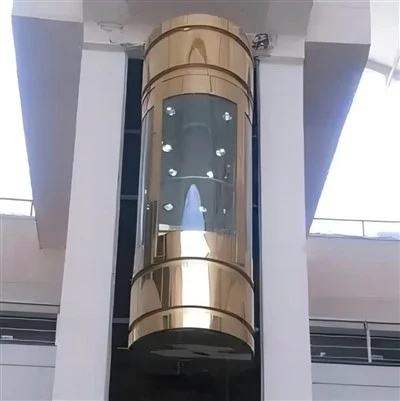
Hey there! As a supplier of small passenger lifts, I've seen firsthand how these nifty little machines interact with building management systems. It's a pretty fascinating topic, and I'm stoked to share my insights with you.
Let's start with the basics. A small passenger lift is designed to carry a limited number of people, usually up to 8 or 10, and is commonly used in low - rise buildings like small offices, residential apartments, or small commercial spaces. These lifts are compact, cost - effective, and offer a convenient vertical transportation solution.
Now, when it comes to building management systems (BMS), they're like the brain of a building. They control and monitor various building functions such as heating, ventilation, air - conditioning (HVAC), lighting, and security. Integrating a small passenger lift with a BMS can bring a whole bunch of benefits to building owners and managers.
Communication and Monitoring
One of the key ways a small passenger lift interacts with a BMS is through communication. The lift system can send real - time data to the BMS, which allows building managers to keep an eye on its operation. For example, the BMS can receive information about the lift's current position, whether it's moving up or down, and if there are any doors open. This data is crucial for ensuring the safety and efficiency of the lift.
If there's an issue with the lift, like a door that won't close properly or a mechanical problem, the lift system can send an alert to the BMS. The BMS can then notify the building management team or the lift maintenance provider. This quick response time can significantly reduce downtime and prevent potential safety hazards.
Moreover, the BMS can also monitor the energy consumption of the lift. Small passenger lifts can be energy - efficient, and by integrating them with the BMS, building managers can track how much energy the lift is using over time. This data can help in identifying opportunities to optimize energy usage, which can lead to cost savings in the long run.
Scheduling and Optimization
Another important aspect of the interaction between a small passenger lift and a BMS is scheduling. The BMS can be programmed to control the lift's operation based on the building's usage patterns. For instance, during peak hours in an office building, the BMS can ensure that the lift is running more frequently to accommodate the increased traffic.
On the other hand, during off - peak hours, the BMS can put the lift in a standby mode to save energy. This kind of intelligent scheduling can improve the overall efficiency of the lift system and enhance the user experience.
The BMS can also optimize the lift's operation by coordinating with other building systems. For example, it can synchronize the lift's movement with the building's lighting system. When the lift arrives at a floor, the BMS can automatically turn on the lights in the lobby area, providing a more welcoming and safe environment for passengers.
Safety and Security
Safety is always a top priority when it comes to small passenger lifts. The integration with a BMS can enhance the safety features of the lift. The BMS can monitor the lift's safety sensors, such as door sensors and overload sensors. If any of these sensors detect a problem, the BMS can immediately stop the lift and send an alarm.
In terms of security, the BMS can be integrated with the building's access control system. This means that only authorized personnel can use the lift. For example, in a high - security building, employees may need to use their access cards to call the lift and select their desired floor. The BMS can keep a record of all lift usage, which can be useful for security audits.
Types of Small Passenger Lifts and Their Interaction
There are different types of small passenger lifts, and each may interact with the BMS in slightly different ways. For example, an Industrial Passenger Lift is designed for use in industrial settings. These lifts often need to be more robust and may have different safety and operational requirements.
The BMS can be configured to monitor the unique aspects of an industrial passenger lift, such as its heavy - duty load capacity and the wear and tear on its components. This ensures that the lift can operate safely and efficiently in an industrial environment.
A Disabled Passenger Lift is designed to provide accessible vertical transportation for people with disabilities. The BMS can play a crucial role in ensuring the lift's accessibility features are working properly. For example, it can monitor the braille buttons, the audible announcements, and the wheelchair - friendly door openings.
A Traction Passenger Elevator is a common type of small passenger lift. It uses a system of ropes and pulleys to move the lift car. The BMS can monitor the traction system's performance, such as the tension of the ropes and the operation of the motor. This helps in preventing breakdowns and ensuring a smooth ride for passengers.
Why Choose Our Small Passenger Lifts for BMS Integration
As a supplier, we understand the importance of seamless integration between our small passenger lifts and building management systems. Our lifts are equipped with advanced communication interfaces that make it easy to connect them to the BMS.


We offer customized solutions, so we can tailor the lift's interaction with the BMS according to your specific building requirements. Whether you have a small office building or a large residential complex, we can ensure that the lift and the BMS work together in harmony.
Our lifts are also designed with the latest safety and energy - efficiency features. When integrated with the BMS, these features can be further enhanced, providing you with a reliable and cost - effective vertical transportation solution.
Let's Talk!
If you're interested in learning more about how our small passenger lifts can interact with your building management system, or if you're considering a new lift installation, don't hesitate to reach out. We're here to answer all your questions and help you make the best decision for your building.
References
- ASME A17.1 Safety Code for Elevators and Escalators.
- EN 81 - 20:2014+A1:2018 Safety rules for the construction and installation of lifts - Part 20: Passenger and goods passenger lifts.