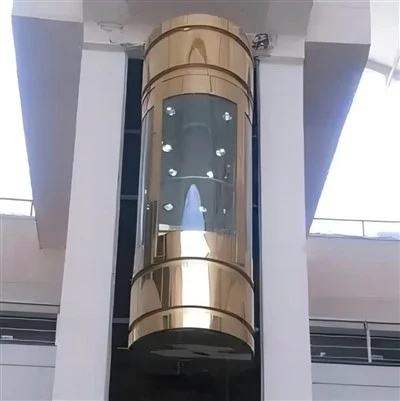
What is the emergency power supply capacity of an observation elevator?
As a well - established supplier of observation elevators, I've encountered numerous inquiries regarding the emergency power supply capacity of these magnificent vertical transportation systems. Observation elevators are not just functional means of getting from one floor to another; they are architectural and engineering marvels that offer passengers a unique and often breathtaking view as they ascend or descend. However, ensuring their safety and reliability, especially during power outages, is of utmost importance.
Understanding the Basics of Emergency Power Supply for Observation Elevators
An emergency power supply (EPS) for an observation elevator serves as a backup system to maintain basic elevator functions when the main power source fails. This is crucial for the safety of passengers who may be trapped inside the elevator during a blackout. The primary functions that the EPS must support include moving the elevator to the nearest floor and opening the doors, allowing passengers to exit safely.
The capacity of the emergency power supply is typically measured in kilowatts (kW) or ampere - hours (Ah), depending on the type of power source. Batteries are the most common form of emergency power for elevators, and their capacity in ampere - hours indicates how much charge they can store and deliver over a certain period.
Factors Affecting the Emergency Power Supply Capacity
-
Elevator Size and Weight
Larger observation elevators with a greater capacity to carry passengers and heavier cabin weights require more power to operate. The motor that drives the elevator needs to overcome the gravitational force acting on the cabin and its occupants. For instance, a large - scale observation elevator in a high - rise building with a capacity of 20 passengers will need a more powerful emergency power supply compared to a smaller elevator in a low - rise structure that can carry only 5 passengers.

-
Elevator Speed
The speed at which an elevator operates also impacts the emergency power supply capacity. Faster elevators require more energy to accelerate and decelerate. An observation elevator designed to travel at high speeds, say 5 meters per second, will need a larger EPS to ensure that it can still reach the nearest floor safely during a power outage compared to a slower elevator with a speed of 1 meter per second. -
Additional Features
Observation elevators often come with additional features such as lighting, ventilation, and audio systems. These features consume power, and the emergency power supply must be able to support them for a sufficient period to keep passengers comfortable and safe. For example, the lighting in the elevator cabin needs to remain on so that passengers can see clearly, and the ventilation system should continue to operate to provide fresh air. The more elaborate these additional features are, the higher the EPS capacity required.
Calculating the Emergency Power Supply Capacity
To determine the appropriate emergency power supply capacity for an observation elevator, a detailed analysis of the elevator's electrical load is necessary. This involves calculating the power consumption of the motor, lighting, ventilation, and other components.
The power consumption of the motor can be estimated based on its rated power, which is usually provided by the manufacturer. The power consumption of the lighting and ventilation systems can be measured using watt - meters. Once all the power requirements are determined, a safety factor is added to account for any unforeseen circumstances.
For example, if the total power consumption of an elevator's motor, lighting, and ventilation systems is calculated to be 5 kW, a safety factor of 1.2 might be applied. This means that the emergency power supply should have a capacity of at least 6 kW to ensure reliable operation during a power outage.
Industry Standards and Regulations
There are strict industry standards and regulations regarding the emergency power supply capacity of elevators. These standards are in place to ensure the safety of passengers. In many countries, elevators are required to have an emergency power supply that can operate the elevator for a minimum of 30 minutes to 1 hour after a power failure. This time frame allows for the safe evacuation of passengers and the arrival of maintenance personnel.
Meeting the Requirements in Real - World Applications
As a supplier of observation elevators, we work closely with our clients to ensure that the emergency power supply capacity of the elevators we provide meets all the necessary requirements. We conduct detailed site surveys to understand the specific needs of each installation.
For example, in a project where an observation elevator is being installed in a coastal resort, we need to consider the environmental conditions. The high humidity and salt - laden air in coastal areas can affect the performance of the emergency power supply. We may recommend using corrosion - resistant batteries and enclosures to ensure the reliability of the EPS.
In another case, when installing an observation elevator in a hospital, the requirements are even more stringent. Hospitals rely on elevators to transport patients, medical equipment, and staff. In addition to the basic requirements for passenger safety, the elevator may need to be able to transport Hospital Stretcher Lift, Bed Lift In Hospital, or Hospital Bed Elevator during a power outage. This means that the emergency power supply capacity must be carefully calculated to meet these special needs.
Importance of Regular Maintenance
Even with a properly sized emergency power supply, regular maintenance is essential to ensure its reliability. Batteries need to be checked regularly for signs of wear and tear, and their charge levels need to be monitored. The electrical connections in the EPS system should also be inspected to ensure that there are no loose connections or signs of corrosion.
Conclusion
The emergency power supply capacity of an observation elevator is a critical factor in ensuring the safety and reliability of these remarkable transportation systems. By considering factors such as elevator size, speed, additional features, and industry regulations, we can accurately calculate the required EPS capacity. As a supplier of observation elevators, we are committed to providing our clients with elevators that meet the highest safety standards.
If you are in the market for an observation elevator and have questions about the emergency power supply capacity or any other aspect of our products, we encourage you to contact us for a detailed consultation. Our team of experts is ready to assist you in making the right choice for your project.
References
- Elevator Safety Standards Handbook, published by the International Elevator and Escalator Association.
- Electrical Engineering for Elevators, a technical guide by leading elevator manufacturers.
- Research papers on elevator power systems from academic journals in the field of mechanical and electrical engineering.