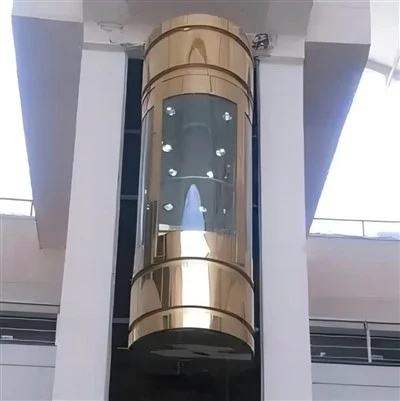
In the realm of large - scale industrial and commercial operations, large freight elevators play a pivotal role. They are the unsung heroes that facilitate the smooth movement of heavy goods, equipment, and materials within multi - story buildings. However, just like any other complex machinery, they are vulnerable to power outages. This is where the emergency power supply system of a large freight elevator comes into play. As a leading supplier of large freight elevators, I am well - versed in the intricacies of these emergency power systems, and I'm excited to share this knowledge with you.
Understanding the Basics of an Emergency Power Supply System
An emergency power supply system (EPSS) for a large freight elevator is a backup mechanism designed to ensure the elevator can continue to operate during a power outage. It is a critical safety feature that prevents passengers and goods from being trapped inside the elevator car for an extended period. The EPSS typically consists of three main components: a power source, a transfer switch, and a control system.
The power source is the heart of the EPSS. It can be a battery bank, a generator, or a combination of both. Battery banks are commonly used for short - term power backup. They are reliable, require minimal maintenance, and can provide enough power to move the elevator car to the nearest floor and open the doors. Generators, on the other hand, are suitable for longer - term power outages. They can be powered by diesel, natural gas, or propane, and are capable of supplying continuous power to the elevator system until the main power is restored.
The transfer switch is responsible for automatically switching the elevator's power supply from the main grid to the emergency power source when a power outage occurs. It ensures a seamless transition, minimizing disruptions to the elevator's operation. The control system monitors the power status, controls the transfer switch, and manages the operation of the elevator during the emergency power mode.
Importance of the Emergency Power Supply System
The importance of an emergency power supply system for a large freight elevator cannot be overstated. First and foremost, it is a matter of safety. In the event of a power outage, passengers and goods can be left stranded inside the elevator car. This can be especially dangerous if the elevator is carrying heavy or hazardous materials. The EPSS allows the elevator to safely reach the nearest floor and open the doors, enabling passengers to exit and preventing potential damage to the cargo.
Secondly, it helps to maintain business continuity. In industrial and commercial settings, large freight elevators are often used to transport essential goods and equipment. A power outage that leaves the elevator inoperable can disrupt the entire supply chain, leading to significant financial losses. With an EPSS in place, the elevator can continue to function, ensuring that operations can resume as quickly as possible after a power outage.
Types of Emergency Power Supply Systems for Large Freight Elevators
Battery - Powered Emergency Power Supply Systems
Battery - powered EPSS are widely used in large freight elevators due to their simplicity and reliability. They are typically made up of lead - acid or lithium - ion batteries. Lead - acid batteries are more affordable and have been used in elevator systems for a long time. They can provide a sufficient amount of power for a short period, usually enough to move the elevator car to the nearest floor.
Lithium - ion batteries, on the other hand, are a newer technology. They have a higher energy density, longer lifespan, and faster charging times compared to lead - acid batteries. Although they are more expensive, their superior performance makes them an attractive option for modern large freight elevators.
Generator - Powered Emergency Power Supply Systems
Generator - powered EPSS are suitable for situations where longer - term power backup is required. Diesel generators are the most common type used in elevator systems. They are robust, reliable, and can provide a large amount of power. However, they require regular maintenance and produce exhaust emissions.
Natural gas and propane generators are also an option. They are cleaner - burning than diesel generators and can be more cost - effective in areas where gas is readily available. These generators can be connected to the building's gas supply, ensuring a continuous fuel source.
Challenges and Considerations
While emergency power supply systems offer many benefits, there are also some challenges and considerations that need to be addressed. One of the main challenges is the cost. Installing an EPSS can be expensive, especially for large freight elevators. The cost includes not only the equipment itself but also the installation, maintenance, and testing.
Another consideration is the space required for the emergency power source. Battery banks and generators can take up a significant amount of space, which may be a problem in buildings with limited floor area. Additionally, the noise and exhaust emissions from generators need to be managed properly to avoid disturbing the building's occupants.
Our Solutions as a Large Freight Elevator Supplier
As a large freight elevator supplier, we understand the unique needs of our customers. We offer a range of emergency power supply systems tailored to different elevator models and building requirements. Our battery - powered EPSS are designed to be compact and efficient, providing reliable short - term power backup. For customers who need longer - term power support, our generator - powered systems are built to high standards, ensuring continuous operation during extended power outages.
We also provide comprehensive installation, maintenance, and testing services. Our team of experienced technicians can install the EPSS quickly and safely, minimizing disruptions to your business. Regular maintenance and testing are crucial to ensure the EPSS is always in good working condition. We offer scheduled maintenance programs to keep your elevator's emergency power system running smoothly.
Different Applications of Freight Elevators and the Role of EPSS
In different scenarios, large freight elevators serve various purposes, and the emergency power supply system plays a crucial role in each case. For Apartment Freight Elevator, it is essential for moving furniture, appliances, and other large items during tenant moves. An EPSS ensures that residents and moving crews are not left stranded during a power outage, providing a safe and convenient experience.
Home Freight Elevator is often used in large private residences to transport heavy items between floors. In case of a power failure, the emergency power system allows homeowners to access essential items stored on different floors and ensures the safety of anyone using the elevator at the time.
Residential Freight Elevator in multi - family residential buildings also relies on the EPSS. It guarantees that residents can move large packages, bicycles, and other bulky items without fear of getting stuck in the elevator during a power outage.
Contact Us for Your Freight Elevator Needs
If you are in the market for a large freight elevator or need to upgrade your existing elevator's emergency power supply system, we are here to help. Our team of experts can provide you with detailed information, customized solutions, and competitive pricing. Whether you are building a new commercial complex, an apartment building, or a private home, we have the right elevator and emergency power supply system for you. Contact us today to discuss your requirements and start the procurement process.

References
- Elevator and Escalator Safety Handbook, Second Edition.
- ASME A17.1/CSA B44 Safety Code for Elevators and Escalators.
- IEEE 446 - 1995 Recommended Practice for Emergency and Standby Power Systems for Industrial and Commercial Applications.