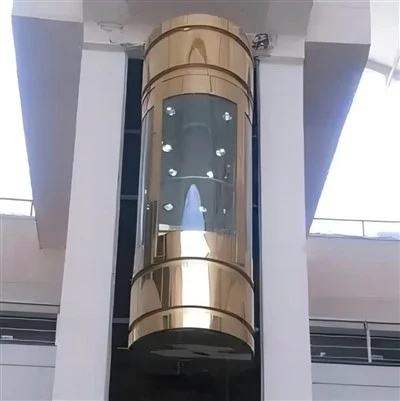
Hey there! As a supplier of Vacuum Passenger Lifts, I often get asked about the speed of these amazing contraptions. So, let's dive right in and explore what the speed of a Vacuum Passenger Lift really is.
First off, let's understand how a Vacuum Passenger Lift works. Unlike traditional elevators that rely on cables, pulleys, and counterweights, a Vacuum Passenger Lift uses air pressure differentials to move the cabin up and down. In simple terms, it creates a vacuum above the cabin to pull it upwards and releases air to let it descend. This innovative technology offers several advantages, including energy efficiency, smooth operation, and a smaller footprint.
Now, onto the speed. The speed of a Vacuum Passenger Lift can vary depending on several factors. One of the main factors is the model and design of the lift. Different manufacturers offer a range of speeds to suit various applications. For instance, in low - rise buildings like small offices or residential homes, a slower speed might be sufficient. These lifts could have a speed of around 0.3 to 0.6 meters per second. This speed is perfectly adequate for short trips between floors and provides a comfortable ride for passengers.
On the other hand, in high - rise commercial buildings where time is of the essence, Vacuum Passenger Lifts can be designed to operate at much higher speeds. Some advanced models can reach speeds of up to 1.0 to 1.5 meters per second or even more. This allows for quick transportation of passengers between multiple floors, reducing waiting times and increasing the overall efficiency of the building.
Another factor that affects the speed is the load capacity of the lift. If the lift is carrying a full load of passengers, the speed might be slightly reduced to ensure safety and smooth operation. The lift's control system is designed to adjust the speed based on the weight inside the cabin. This is an important safety feature that prevents the lift from overloading and ensures a stable ride.
The height of the building also plays a role in determining the appropriate speed. In taller buildings, a faster - moving lift is needed to cover the greater distance in a reasonable amount of time. For example, in a skyscraper with dozens of floors, a slow - moving lift would be impractical as passengers would have to wait a long time to reach their destination. So, for such buildings, high - speed Vacuum Passenger Lifts are the way to go.
When comparing the speed of Vacuum Passenger Lifts with other types of passenger lifts, it's interesting to note the differences. Take the Commercial Passenger Elevator for example. Traditional commercial elevators can have a wide range of speeds, from relatively slow in older buildings to very high in modern skyscrapers. However, Vacuum Passenger Lifts offer a unique combination of speed and energy efficiency. They can achieve comparable speeds to traditional commercial elevators while using less energy, which is a huge advantage in today's environmentally - conscious world.


Disabled Passenger Lift is another type of lift that serves a specific purpose. These lifts are often designed with a focus on safety and accessibility rather than high - speed operation. Vacuum Passenger Lifts can also be customized to meet the needs of disabled passengers. They can be equipped with features such as slow - start and slow - stop functions to provide a gentle and comfortable ride for those with mobility issues. The speed of a Vacuum Passenger Lift used in a disabled - accessible environment can be adjusted to ensure the safety and well - being of all passengers.
Disabled Passenger Lift is another type of lift that serves a specific purpose. These lifts are often designed with a focus on safety and accessibility rather than high - speed operation. Vacuum Passenger Lifts can also be customized to meet the needs of disabled passengers. They can be equipped with features such as slow - start and slow - stop functions to provide a gentle and comfortable ride for those with mobility issues. The speed of a Vacuum Passenger Lift used in a disabled - accessible environment can be adjusted to ensure the safety and well - being of all passengers.
The Traction Passenger Lift is a well - known type of elevator. It uses ropes or belts and a counterweight system to move the cabin. Traction lifts can achieve high speeds, especially in large commercial buildings. But Vacuum Passenger Lifts offer a different approach. They don't have the same mechanical complexity as traction lifts, which can lead to lower maintenance costs and potentially longer service life. In terms of speed, while traction lifts might have a slight edge in some high - end applications, Vacuum Passenger Lifts can still provide a fast and efficient service for many building types.
So, if you're in the market for a passenger lift, whether it's for a commercial building, a residential property, or a disabled - accessible space, the speed of the Vacuum Passenger Lift is an important factor to consider. You need to think about the number of floors, the expected traffic volume, and the specific requirements of your building.
If you're interested in learning more about Vacuum Passenger Lifts and how their speed can benefit your project, don't hesitate to reach out. We're here to help you find the perfect lift solution for your needs. Whether you have questions about speed, installation, or maintenance, our team of experts is ready to assist you. Contact us today to start the conversation and take the first step towards a more efficient and comfortable vertical transportation system.
References
- Elevator Engineering Handbook, various editions
- Industry reports on vertical transportation technology