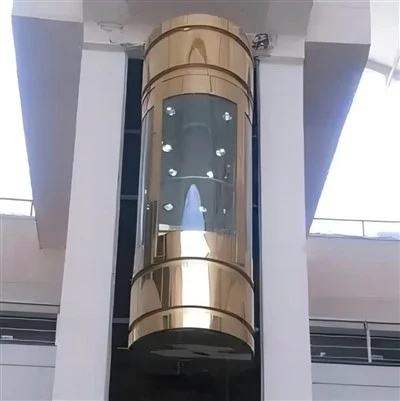
As a supplier of hospital bed elevators, I've often been asked about the noise levels during their operation. This is a crucial concern, especially in a hospital setting where a quiet environment is essential for patient comfort and recovery. In this blog, I'll delve into the factors that influence the noise of hospital bed elevators and how we address these issues to ensure a quiet and smooth operation.
Understanding the noise sources in hospital bed elevators
Mechanical components
The mechanical parts of an elevator, such as the motor, gears, and pulleys, are primary sources of noise. When the elevator is in motion, these components work together to lift and lower the car. The friction between moving parts can generate vibrations, which in turn produce noise. For example, a worn - out gear may produce a grinding noise, and a loose pulley can cause rattling.


Counterweight movement
The counterweight system is an important part of an elevator. As the elevator car moves up and down, the counterweight moves in the opposite direction. The movement of the counterweight along its guide rails can create noise, especially if the guide rails are not properly lubricated or if there are misalignments.
Airflow and ventilation
Elevators require proper ventilation to ensure the comfort of passengers. However, the airflow through the ventilation system can also be a source of noise. When air rushes through ducts or vents at high speeds, it can create a whistling or humming sound.
The impact of noise in a hospital environment
Patient well - being
In a hospital, patients are often in a vulnerable state, and excessive noise can have a negative impact on their recovery. Noise can disrupt sleep, increase stress levels, and even cause anxiety. For patients who are trying to rest and recuperate, a noisy elevator can be a significant distraction.
Staff efficiency
Hospital staff need to focus on providing high - quality care to patients. A noisy elevator can be a constant distraction, making it difficult for them to concentrate on their work. This can potentially affect the efficiency and accuracy of their tasks.
Reputation of the hospital
A noisy elevator can give a negative impression to patients, their families, and visitors. It can make the hospital seem less professional and less caring about the well - being of its patients. This can have a long - term impact on the hospital's reputation.
How we address noise issues in our hospital bed elevators
High - quality components
We use only the highest - quality mechanical components in our hospital bed elevators. Our motors are designed to operate quietly and efficiently, with advanced insulation to reduce noise transmission. The gears and pulleys are precision - engineered to minimize friction and vibrations. For example, we use self - lubricating bearings that require less maintenance and produce less noise compared to traditional bearings.
Precise installation and alignment
Proper installation and alignment are crucial to reducing noise in elevators. Our installation teams are highly trained and experienced. They ensure that all components are correctly installed and aligned, including the guide rails for the elevator car and the counterweight. This helps to minimize the noise caused by misalignments and ensures a smooth and quiet operation.
Advanced noise - reduction technology
We incorporate advanced noise - reduction technology into our elevator designs. For example, we use sound - absorbing materials in the elevator car and the machine room. These materials can effectively absorb and dampen noise, reducing the amount of sound that is transmitted to the surrounding environment. Additionally, we have developed ventilation systems that are designed to minimize airflow noise.
Real - world examples of quiet hospital bed elevators
We have installed our hospital bed elevators in many hospitals around the world, and we have received positive feedback on their quiet operation. For instance, in [Hospital Name], our elevators were installed in a new wing dedicated to critical care patients. The hospital staff reported that the elevators were so quiet that they hardly noticed them running, which was a significant improvement compared to the old elevators.
Conclusion
Noise in hospital bed elevators is a serious issue that can have a significant impact on the hospital environment. As a supplier, we are committed to providing elevators that operate quietly and efficiently. Our use of high - quality components, precise installation, and advanced noise - reduction technology ensures that our hospital bed elevators meet the highest standards of noise control.
If you are interested in our Hospital Bed Lift, Elevator for Hospital, or Hospital Lift, please feel free to contact us for a detailed discussion about your requirements and to explore how we can provide the best solution for your hospital. We look forward to working with you to create a quiet and comfortable environment for your patients and staff.
References
- "Elevator Design and Installation Standards", National Elevator Industry, Inc.
- "The Impact of Noise on Patient Recovery", Journal of Hospital Environment Management
- "Noise Reduction Techniques in Elevator Systems", International Journal of Elevator Technology