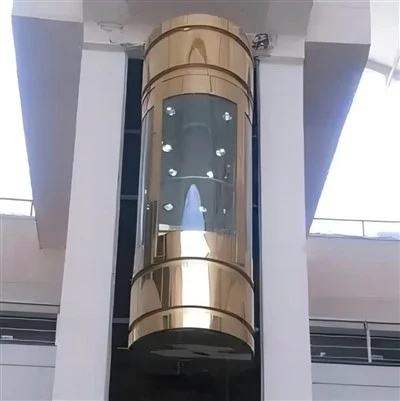
As a seasoned supplier of small passenger lifts, I understand the paramount importance of security when it comes to preventing unauthorized access to these essential vertical transportation systems. In today's world, with security concerns at the forefront of building management, ensuring that only authorized individuals can use a small passenger lift is not just a matter of convenience but also a crucial safety measure. In this blog post, I will explore the various security features that can be incorporated into small passenger lifts to safeguard against unauthorized entry.
Access Control Systems
One of the most effective ways to prevent unauthorized access to a small passenger lift is through the implementation of access control systems. These systems use a variety of methods to verify the identity of users before granting them access to the lift.
Key Cards and Key Fobs
Key cards and key fobs are among the most common access control methods. They work by using a magnetic stripe or RFID (Radio-Frequency Identification) technology to store user information. When a user presents their key card or key fob to a card reader installed near the lift entrance, the system reads the information and checks it against a pre-approved list. If the user is authorized, the lift doors will open, allowing them to enter.
Key cards and key fobs offer several advantages. They are relatively inexpensive, easy to use, and can be easily reprogrammed or deactivated if lost or stolen. Additionally, they can be customized to provide different levels of access, allowing building managers to restrict users to specific floors or times of day.
Biometric Readers
Biometric readers take access control to the next level by using unique physical characteristics, such as fingerprints, iris patterns, or facial features, to verify a user's identity. These readers are highly accurate and difficult to bypass, making them an ideal choice for high-security environments.
Fingerprint readers are the most common type of biometric reader used in small passenger lifts. When a user places their finger on the reader, the system captures a digital image of their fingerprint and compares it to a pre-registered template. If the fingerprints match, access is granted.
Iris scanners and facial recognition systems are also becoming more popular. Iris scanners use near-infrared light to capture an image of the user's iris, which is then analyzed for unique patterns. Facial recognition systems use cameras to capture an image of the user's face and compare it to a database of authorized faces.
Biometric readers offer a high level of security, as they are virtually impossible to forge. However, they can be more expensive to install and maintain compared to key cards and key fobs.
Keypad Entry Systems
Keypad entry systems require users to enter a unique PIN (Personal Identification Number) to gain access to the lift. These systems are simple and cost-effective, making them a popular choice for many small buildings.
When a user enters their PIN on the keypad, the system checks it against a pre-approved list. If the PIN is correct, the lift doors will open. Keypad entry systems can be programmed to allow different levels of access, and the PINs can be easily changed if needed.
However, keypad entry systems are not as secure as key cards, key fobs, or biometric readers, as PINs can be easily forgotten or shared. To enhance security, some keypad entry systems use a combination of a PIN and a secondary authentication method, such as a fingerprint or a proximity card.
Lift Cab Monitoring
In addition to access control systems, lift cab monitoring is another important security feature that can help prevent unauthorized access to a small passenger lift. Lift cab monitoring systems use cameras and sensors to monitor the activity inside the lift cab and detect any unauthorized behavior.
Closed-Circuit Television (CCTV) Cameras
CCTV cameras are a common feature in many small passenger lifts. These cameras are installed inside the lift cab and are connected to a monitoring system located in the building's security office. The cameras record the activity inside the lift cab 24/7, allowing security personnel to review the footage in case of an incident.
CCTV cameras act as a deterrent to unauthorized access and can also provide valuable evidence in the event of a security breach. They can help identify suspects, track their movements, and provide information that can be used in criminal investigations.
Motion Sensors
Motion sensors are another useful security feature that can be installed in a small passenger lift. These sensors detect movement inside the lift cab and can trigger an alarm if unauthorized activity is detected.
Motion sensors can be used in conjunction with CCTV cameras to provide an additional layer of security. For example, if the motion sensors detect movement in the lift cab when it is not supposed to be in use, the system can automatically start recording the footage from the CCTV cameras.
Door Locking Mechanisms
The doors of a small passenger lift are another vulnerable point that needs to be protected against unauthorized access. There are several door locking mechanisms that can be used to enhance the security of lift doors.
Automatic Door Locks
Automatic door locks are designed to lock the lift doors as soon as they close. These locks are controlled by the lift's control system and can only be unlocked when a valid access credential is presented.
Automatic door locks provide an additional layer of security by preventing unauthorized individuals from forcing the doors open. They are also useful in preventing the lift from being used during maintenance or emergency situations.
Manual Door Locks
Manual door locks are an additional security measure that can be used in conjunction with automatic door locks. These locks are typically installed on the outside of the lift doors and can be locked and unlocked using a key.
Manual door locks are useful for restricting access to the lift during non-operating hours or for maintenance purposes. They can also be used to prevent unauthorized individuals from tampering with the lift doors.
Emergency Stop and Alarm Systems
Emergency stop and alarm systems are essential security features that can help protect passengers in the event of an emergency or unauthorized access.
Emergency Stop Buttons
Emergency stop buttons are installed inside the lift cab and at each landing. These buttons allow passengers to stop the lift in case of an emergency, such as a fire, a medical emergency, or a security breach.
When the emergency stop button is pressed, the lift will immediately come to a stop, and the doors will open. This allows passengers to exit the lift safely and prevents the lift from being used until the emergency situation has been resolved.
Alarm Systems
Alarm systems are another important security feature that can be installed in a small passenger lift. These systems are designed to alert security personnel or building management in case of an emergency or unauthorized access.
Alarm systems can be triggered by a variety of events, such as the activation of an emergency stop button, the detection of unauthorized access, or the malfunction of the lift. When the alarm is triggered, a loud siren will sound, and a signal will be sent to the security office or a monitoring center.
Conclusion
Preventing unauthorized access to a small passenger lift is essential for the safety and security of building occupants. By implementing a combination of access control systems, lift cab monitoring, door locking mechanisms, and emergency stop and alarm systems, building managers can ensure that only authorized individuals can use the lift.


At our company, we offer a wide range of small passenger lifts, including MRL Passenger Elevator, Silent Passenger Elevator, and Commercial Passenger Elevator, all of which can be equipped with the latest security features to meet your specific needs.
If you are interested in learning more about our small passenger lifts and the security features we offer, please do not hesitate to contact us. Our team of experts will be happy to assist you in choosing the right lift and security solutions for your building.
References
- Elevator and Escalator Handbook, Fourth Edition by Joseph J. Cappetta
- ASME A17.1 Safety Code for Elevators and Escalators