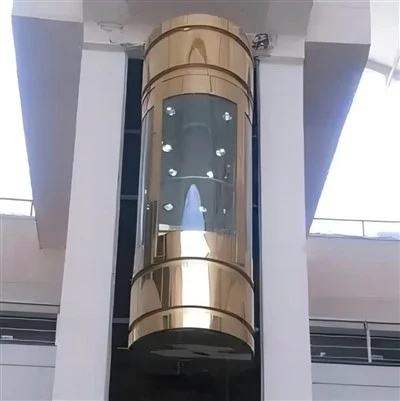
As a supplier of Vacuum Passenger Lifts, one of the most common questions I receive is about the certifications these innovative vertical transportation systems require. In this blog post, I'll delve into the essential certifications that Vacuum Passenger Lifts need to ensure safety, quality, and regulatory compliance.
Understanding Vacuum Passenger Lifts
Before we jump into the certifications, let's briefly understand what Vacuum Passenger Lifts are. These lifts operate on a revolutionary technology that uses air pressure differentials to move the cabin up and down. Unlike traditional Traction Passenger Elevator, Machine Room Passenger Elevator, and MRL Passenger Elevator, Vacuum Passenger Lifts don't rely on cables, pulleys, or a large machine room. This makes them more space - efficient, easier to install, and often more environmentally friendly.
Safety - Related Certifications
EN 81 Standards
The European Standard EN 81 series is crucial for lifts sold in the European Union and many other regions. EN 81 sets out the safety requirements for the construction and installation of new passenger and goods passenger lifts. For Vacuum Passenger Lifts, compliance with these standards ensures that the lift is designed and built to prevent hazards such as unauthorized access, falls, and entrapment.
EN 81 - 20, for example, focuses on lifts designed to carry passengers and (if appropriate) goods. It covers aspects like the strength of the lift car, the safety features of the door systems, and the protection against electrical hazards. EN 81 - 50 further addresses the safety requirements for electronically controlled safety - related systems in lifts.
By obtaining certification to the EN 81 standards, we demonstrate that our Vacuum Passenger Lifts meet the rigorous safety benchmarks set by European authorities. This is not only a legal requirement in many places but also reassures our customers that the lifts they install are safe for use.
ASME A17.1
In the United States, the American Society of Mechanical Engineers (ASME) A17.1 standard is the cornerstone of lift safety. It provides detailed requirements for the design, construction, installation, inspection, testing, maintenance, alteration, and repair of elevators, escalators, and moving walks.
ASME A17.1 covers a wide range of safety features, including emergency stop buttons, overspeed governors, and safety brakes. For Vacuum Passenger Lifts, compliance with this standard means that every aspect of the lift's operation, from the air pressure control system to the cabin's structural integrity, is thoroughly evaluated and meets the high - level safety criteria.
ISO 22559
The International Organization for Standardization (ISO) 22559 standard is related to the safety requirements for lifts in buildings with limited space. Since Vacuum Passenger Lifts are often chosen for their compact design, this standard is particularly relevant.
ISO 22559 focuses on aspects like the minimum dimensions of the lift shaft, the clearances between moving parts, and the safety requirements for small - sized lift cars. By adhering to this standard, our Vacuum Passenger Lifts can be safely installed in buildings where space is at a premium, such as small apartments or historical buildings with limited structural modifications possible.
Quality and Performance Certifications
CE Marking
The CE marking is a mandatory conformity mark for products sold within the European Economic Area (EEA). It indicates that a product meets all the relevant European health, safety, and environmental protection requirements.
To obtain the CE marking for our Vacuum Passenger Lifts, we need to ensure compliance with a variety of European directives, including the Machinery Directive and the Low Voltage Directive. The CE marking not only allows us to sell our products in the EEA but also serves as a mark of quality and compliance for customers around the world.
UL Certification
Underwriters Laboratories (UL) is a well - known global safety certification company. UL certification for Vacuum Passenger Lifts means that the product has been tested to meet UL's strict safety and performance standards.
UL evaluates aspects such as the lift's electrical components, fire resistance, and mechanical reliability. Having UL certification gives our customers in the United States and other regions that recognize UL standards the confidence that our Vacuum Passenger Lifts are safe and of high quality.
Energy - Efficiency Certifications
ISO 25745
The ISO 25745 series of standards focuses on the energy performance of lifts, escalators, and moving walks. With the increasing emphasis on sustainability, energy - efficient lifts are becoming more and more popular.
ISO 25745 provides a framework for measuring, evaluating, and improving the energy performance of vertical transportation systems. Our Vacuum Passenger Lifts are designed to meet or exceed the requirements of ISO 25745, which means they consume less energy compared to traditional lift systems. This not only reduces the environmental impact but also lowers the operating costs for building owners.


Why Certifications Matter
Certifications are not just pieces of paper; they are a testament to the quality, safety, and performance of our Vacuum Passenger Lifts. For building owners and developers, choosing certified lifts means ensuring the safety of their occupants and complying with local regulations. For architects and designers, certified lifts offer the confidence to incorporate these innovative systems into their building designs.
Moreover, in a competitive market, having a comprehensive range of certifications sets our Vacuum Passenger Lifts apart from the competition. It shows that we are committed to providing the highest - quality products that meet the most stringent international standards.
Contact Us for Procurement
If you're interested in purchasing Vacuum Passenger Lifts for your upcoming project or to replace an existing lift system, we're here to help. Our team of experts can guide you through the selection process, explain the benefits of our certified Vacuum Passenger Lifts, and provide you with a detailed quote. We are dedicated to customer satisfaction and look forward to discussing how our products can meet your specific needs. Reach out to us and start the conversation today.
References
- "EN 81 Series Standards," European Committee for Standardization.
- "ASME A17.1 Standard," American Society of Mechanical Engineers.
- "ISO 22559 Standard," International Organization for Standardization.
- "CE Marking Directive," European Commission.
- "UL Certification Guidelines," Underwriters Laboratories.
- "ISO 25745 Series Standards," International Organization for Standardization.