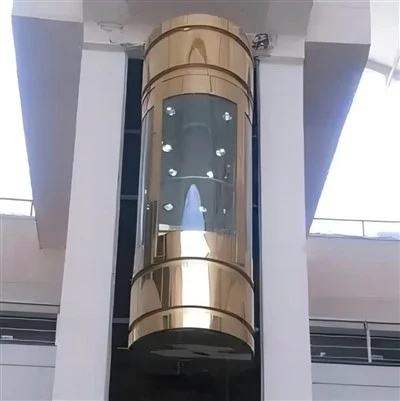
In the realm of modern building infrastructure, passenger elevators play a pivotal role in ensuring convenient and efficient vertical transportation. As a leading passenger elevator supplier, we often encounter inquiries from clients about the differences between single - speed and variable - speed passenger elevators. In this blog post, we will delve into the characteristics, advantages, and disadvantages of these two types of elevators to help you make an informed decision when choosing the right elevator for your building.
Operating Principle
Let's start by understanding the basic operating principles of single - speed and variable - speed passenger elevators.
A single - speed elevator, as the name implies, operates at a constant speed throughout its journey. Once the elevator is activated, it moves at a fixed velocity from the starting floor to the destination floor. This simplicity in operation makes it relatively straightforward in terms of mechanical design and control system. The motor of a single - speed elevator runs at a set RPM (revolutions per minute), and the elevator car moves at a consistent pace.
On the other hand, a variable - speed elevator has the ability to adjust its speed according to different stages of the journey. When the elevator starts moving, it can accelerate gradually, reaching a maximum speed during the mid - journey for efficient transportation. As it approaches the destination floor, it slows down smoothly to ensure a gentle and accurate stop. This is achieved through advanced motor control technology that can vary the speed of the motor based on real - time requirements.
Speed and Efficiency
One of the most obvious differences between the two types of elevators is speed and overall efficiency.
Single - speed elevators are limited by their fixed speed. They may take longer to reach their destination, especially in tall buildings. For instance, in a multi - story commercial building, a single - speed elevator needs to travel at the same speed regardless of the distance between floors. If it has to travel a long distance, the pre - set speed may not be optimal, resulting in longer waiting times for passengers.
Variable - speed elevators, on the contrary, offer superior efficiency. Their ability to accelerate and decelerate as needed allows for a more optimized travel experience. They can quickly cover long distances at high speed and then slow down accurately when approaching the destination. In a busy office building, this can significantly reduce the average travel time for passengers, increasing the overall throughput of the elevator system. For passengers in a hurry, a variable - speed elevator can save precious time, enhancing their satisfaction with the building's facilities.
Energy Consumption
Energy consumption is a crucial factor to consider, especially in an era where energy efficiency is highly valued.
Single - speed elevators tend to consume more energy. Since they run at a constant speed, they use a relatively large amount of power even when they don't need to. For example, when traveling a short distance between floors, the elevator still operates at the same high - power state, which is inefficient in terms of energy use.


In contrast, variable - speed elevators are designed with energy efficiency in mind. They can adjust the power consumption according to the speed of the elevator. During acceleration, more power is used, but during the constant - speed cruising phase, the power consumption can be optimized. When approaching the destination and decelerating, the elevator can also recover some of the energy and convert it back into usable electricity. If you are interested in Energy - efficient Passenger Elevators, our variable - speed models are a great choice.
Ride Comfort
Ride comfort is another aspect where the two types of elevators differ.
Single - speed elevators, due to their fixed - speed operation, may not provide the smoothest ride. When starting and stopping, there can be sudden jolts because the elevator goes from a stationary state to a fixed speed instantaneously and vice versa. This can be uncomfortable for passengers, especially those who are sensitive to motion.
Variable - speed elevators offer a much smoother ride. The gradual acceleration and deceleration ensure that the change in speed is barely noticeable to passengers. The advanced control system can also adjust to different loads and travel distances to provide a consistent and comfortable experience. In a high - end residential building or a luxury hotel, the smooth ride of a variable - speed elevator can enhance the overall experience for guests.
Cost Considerations
Cost is always a significant factor in the decision - making process.
In terms of initial purchase cost, single - speed elevators are generally more affordable. Their simpler design and mechanical components make them less expensive to manufacture and install. For small - scale buildings with low traffic volume, such as a small office building or a low - rise residential complex, a single - speed elevator can be a cost - effective solution.
However, when considering the long - term cost, including energy consumption and maintenance, variable - speed elevators may prove to be more economical. Although they have a higher upfront cost, their lower energy consumption over time can result in significant savings on electricity bills. Additionally, their advanced technology often means fewer mechanical breakdowns and less frequent maintenance, which can also reduce long - term costs.
Application Scenarios
The choice between single - speed and variable - speed elevators also depends on the specific application scenarios.
Single - speed elevators are suitable for buildings with relatively low traffic and short - distance travel requirements. For example, a small two - or three - story retail store may not need the high - end features of a variable - speed elevator. A single - speed elevator can meet the basic transportation needs of customers and employees at a lower cost.
Variable - speed elevators are ideal for high - traffic buildings such as large commercial centers, office skyscrapers, and hospitals. In these places, the need for efficient and comfortable vertical transportation is high. For instance, in a busy hospital, patients and medical staff need to move quickly and smoothly between different floors. A variable - speed elevator can provide the necessary speed, efficiency, and comfort. If you are looking for a Commercial Passenger Elevator for your business, our variable - speed models are well - suited for such high - demand environments.
Safety Features
Both single - speed and variable - speed elevators are equipped with a range of safety features, but there are some differences worth noting.
Single - speed elevators typically have basic safety mechanisms such as overload protection, emergency stop buttons, and door interlocks. These features are essential for ensuring the safety of passengers. However, due to their simpler design, they may not have some of the advanced safety features found in variable - speed elevators.
Variable - speed elevators often come with more sophisticated safety systems. For example, they may have advanced speed - monitoring systems that can detect abnormal speed changes and automatically adjust or stop the elevator to prevent accidents. They may also have better emergency braking systems, which can stop the elevator more quickly and smoothly in case of an emergency. In addition, many variable - speed elevators are Automatic Passenger Elevators, which means they can operate more independently and safely without much manual intervention.
Conclusion
In conclusion, the differences between single - speed and variable - speed passenger elevators are significant. While single - speed elevators offer simplicity and lower initial cost, variable - speed elevators provide superior speed, efficiency, energy savings, ride comfort, and safety. As a passenger elevator supplier, we understand that each building has unique requirements, and we are committed to helping you choose the most suitable elevator for your needs.
If you are considering installing a new passenger elevator or upgrading your existing one, we invite you to contact us for a detailed consultation. Our team of experts can assess your building's specifications, traffic volume, and budget to recommend the best elevator solution for you. Let's work together to ensure smooth and efficient vertical transportation in your building.
References
- Elevator Technology Handbook, McGraw - Hill Education
- ASME A17.1 Safety Code for Elevators and Escalators
- International Association of Elevator Engineers (IAEE) Publications